
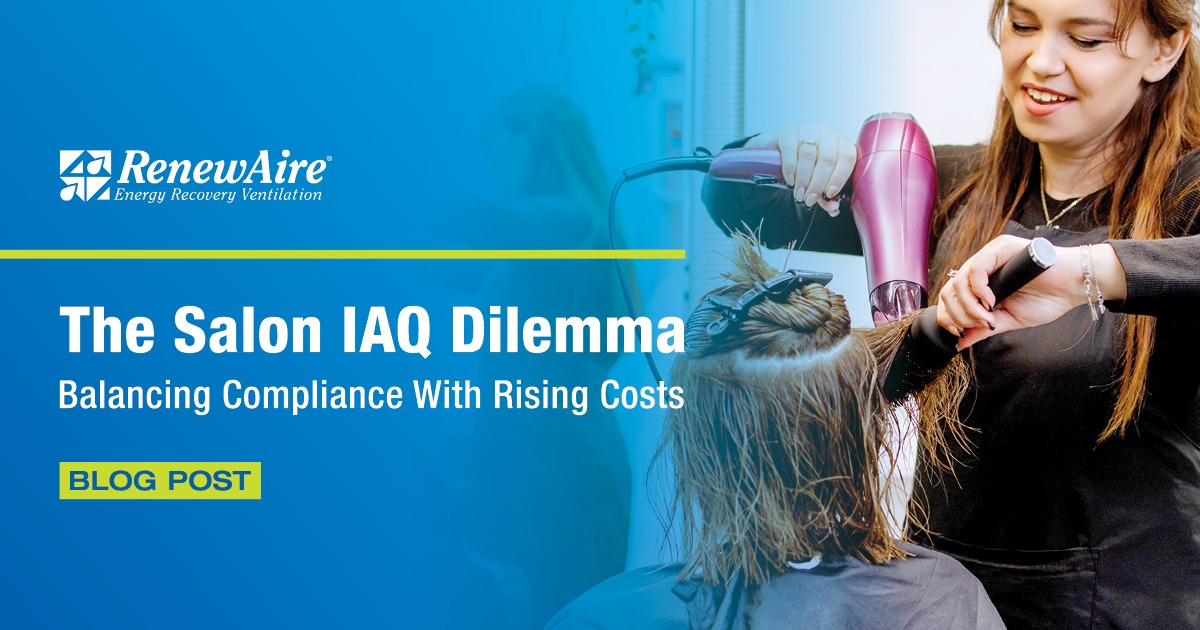
Los spas y los salones de manicura se promocionan como refugios para el cuidado personal. Sin embargo, estos espacios suelen albergar una gran cantidad de sustancias químicas tóxicas. Los tratamientos diarios para el pelo, las uñas y el maquillaje emiten constantemente vapores nocivos en la sala. Cuando estas emisiones no pueden salir al exterior, contaminan la masa de aire común y deterioran la calidad del aire interior (IAQ).
De hecho, la mala calidad del aire es mucho más que un simple problema de olores persistentes. Afecta directamente a la salud, el bienestar, la productividad y la función cognitiva de todos los que están dentro. Para los clientes, por desgracia, una sola visita puede provocar fuertes dolores de cabeza o náuseas. Para los trabajadores de los salones, lo que está en juego es aún mayor. Al fin y al cabo, la exposición diaria al formaldehído tóxico y a los compuestos orgánicos volátiles (COV) conlleva graves riesgos para la salud laboral a largo plazo.
La cruda realidad sobre los productos de belleza: sustancias químicas, toxinas y partículas
Los graves riesgos para la salud mencionados anteriormente se deben a una combinación concreta de ingredientes muy peligrosos. Las investigaciones realizadas por The New York Times y la OSHA han advertido explícitamente sobre un grupo de contaminantes químicos muy conocido como el «trío tóxico». Cuando estos compuestos gaseosos se mezclan con partículas microscópicas, crean un ambiente hostil para respirar, tanto para los empleados como para los clientes.
En concreto, hay cuatro riesgos importantes que amenazan a diario el espacio de trabajo interior:
Tolueno: Este disolvente industrial actúa como neurotoxina que afecta al desarrollo y al sistema nervioso. En los salones de belleza, el tolueno se usa principalmente para que los esmaltes de uñas y los tintes para el pelo se apliquen con facilidad. La OSHA advierte de que la exposición provoca dolores de cabeza, mareos y entumecimiento inmediatos. A largo plazo, la inhalación crónica se asocia a daños permanentes en el hígado y los riñones.
Ftalato de dibutilo (DBP): Se añade a las fórmulas líquidas para aumentar su flexibilidad, y esta sustancia química es un potente disruptor endocrino. Además, hay datos que relacionan directamente la exposición al DBP con complicaciones en la salud reproductiva y defectos del desarrollo.
Formaldehído: presente en los alisadores de pelo líquidos y en los endurecedores de uñas, el formaldehído es un carcinógeno conocido. Cuando se calienta durante el proceso, desprende gases que provocan graves problemas respiratorios, crisis asmáticas agudas y daños celulares a largo plazo.
PM2,5 (partículas finas): A diferencia de los vapores gaseosos, este peligro está formado por partículas físicas de tamaño inferior a una micra. Limar las uñas constantemente, cortarse el pelo y usar aparatos de peluquería a altas temperaturas liberan activamente millones de partículas de PM2,5 al aire. Como resultado, estas partículas penetran profundamente en los pulmones, lo que daña de forma permanente la función respiratoria y provoca inflamación sistémica crónica.
El reto del cumplimiento normativo: satisfacer la elevada demanda de ACH en plena crisis de los servicios públicos
Los expertos del sector y las normas de construcción recomiendan unos índices de ventilación elevados para diluir estas intensas concentraciones de vapores químicos. Por eso, la mayoría de las autoridades locales exigen que los centros profesionales de belleza, peluquería y spa mantengan un nivel mínimo de entre 8 y 14 renovaciones de aire por hora (ACH). Estas renovaciones de aire son fundamentales para garantizar un aire interior saludable.
Sin embargo, alcanzar estos altos volúmenes de renovación de aire plantea un grave dilema operativo a los propietarios de los salones de belleza. El análisis del sector indica que los salones ya están soportando un aumento del 31 % en los costes operativos. Esta crisis viene provocada directamente por el aumento vertiginoso de las facturas de servicios públicos. Las configuraciones tradicionales de climatización no están en absoluto preparadas para hacer frente a estas altas exigencias de ACH de forma asequible. Como resultado, esta situación obliga a los locales a enfrentarse a dos problemas estructurales distintos:
La trampa de la recirculación
Los sistemas de climatización estándar de techo y tipo split dependen en gran medida de la recirculación del aire dentro del edificio para regular la temperatura interior. En un salón de belleza, por desgracia, este diseño mecánico lo único que hace es redistribuir los vapores tóxicos de los disolventes y los olores químicos persistentes de un puesto a otro.
La penalización energética
Cumplir con la normativa simplemente expulsando el aire viciado del interior al exterior mediante extractores tradicionales supone una enorme carga económica. En concreto, esta práctica obliga a que las instalaciones principales de calefacción y refrigeración funcionen constantemente para acondicionar el aire exterior sin tratar. Esta ventilación de circuito abierto hace que las facturas mensuales de servicios públicos se disparen, lo que agrava la crisis de los gastos generales del sector.
La solución: ventilación con recuperación de energía equilibrada
Para evitar tanto el problema de la recirculación como el gasto energético, los locales deben pasar a utilizar aire exterior mediante una estrategia de ventilación equilibrada. Aquí es donde la ventilación con recuperación de energía se convierte en la solución mecánica definitiva. Al gestionar al mismo tiempo el suministro de aire fresco y la extracción del aire viciado, los propietarios de los salones pueden cumplir cómodamente con las estrictas normas de calidad del aire interior sin que les afecte a los beneficios.
Para establecer el nivel de referencia oficial de este entorno interior seguro, los ingenieros mecánicos diseñan los espacios comerciales siguiendo la norma 62.1 de la ASHRAE (Ventilación para una calidad del aire interior aceptable).
Norma ASHRAE 62.1: Criterios de ventilación para espacios de belleza y cuidado personal
| Categoría de ocupación | Tasa por persona (Rp) CFM/Persona | Ratio de superficie (Ra) CFM/pie². | Densidad de ocupantes por defecto Personas/1.000 ft² | CO2 máximo por encima del ambiente PPM |
|---|---|---|---|---|
| Salones de Belleza y Uñas | 20 | 0.12 | 25 | NA |
| Peluquerías | 7.5 | 0.06 | 25 | 600 |
| Entrada principal Vestíbulos / Recepción | 5 | 0.06 | 10 | 600 |
| Salas de descanso | 5 | 0.06 | 25 | 600 |
* Nota sobre la aplicación de la conformidad DCV:
Los espacios marcados con «NA» no pueden utilizar ventilación controlada por demanda (DCV) basada en CO₂. Según las directrices explícitas de ASHRAE, el control de CO₂ no es aplicable en absoluto en los salones profesionales de belleza y manicura. Estos espacios generan grandes cantidades de contaminantes no humanos, como la evaporación de disolventes y el polvo en suspensión. Por eso, regular la ventilación basándose únicamente en el número de personas presentes supone una grave infracción de la normativa.
Sistemas ERV con el tamaño adecuado para salones de belleza
Cumplir con esta normativa garantiza un lugar de trabajo saludable. Por suerte, los ventiladores de recuperación de energía (ERV) de RenewAire permiten a los salones de belleza hacerlo de forma asequible, ya que recuperan la energía del aire de salida. Como la mayoría de los salones independientes ocupan poco espacio, los propietarios de las instalaciones pueden cumplir fácilmente estos requisitos de flujo de aire con unidades más pequeñas y muy eficientes. La mayoría de los salones independientes ocupan poco espacio. Por suerte, los propietarios de los locales pueden cumplir fácilmente estos requisitos de flujo de aire con unidades más pequeñas y muy eficientes, como el RenewAire EV Premium M o el HE05 ERV. Así te ahorras tener que instalar equipos comerciales enormes.
Cómo protegen los sistemas RenewAire tus resultados económicos
Estos sistemas, con el tamaño adecuado, mantienen los salones en buen estado y rentables, ya que actúan como un intercambiador de energía muy eficiente:
Renovar el aire, ahorrar energía: El RenewAire ERV expulsa continuamente del edificio el aire viciado y cargado de sustancias químicas del salón. Al mismo tiempo, introduce aire fresco y limpio del exterior. Dentro de la unidad, estas dos corrientes de aire pasan a través de un núcleo de placas estáticas.
Aprovechamiento de la inversión: El aire de salida preacondiciona el aire fresco entrante antes de que llegue al salón. Este proceso avanzado recupera hasta un 70 % de la energía de calefacción o refrigeración, lo que supone un ahorro de dinero que los extractores tradicionales desperdician.
Al usar un sistema ERV de RenewAire, los dueños de salones ya no tienen que elegir entre cumplir con la normativa y la viabilidad económica. El sistema elimina constantemente los COV y las partículas, al tiempo que mantiene las facturas mensuales de los servicios públicos totalmente estables.
Conclusión: Mejorar la experiencia en el salón y los resultados económicos
Para ofrecer una experiencia de alta calidad en un salón de belleza o un spa no basta con contar con servicios de primera: también hace falta un ambiente interior seguro, limpio y saludable. Al superar las limitaciones tradicionales de los sistemas de climatización e implementar una estrategia de ventilación equilibrada con los ERV de RenewAire, los propietarios de salones de belleza pueden cumplir sin problemas con las rigurosas normas ASHRAE 62.1.
En definitiva, este método elimina las toxinas químicas nocivas y las partículas finas, al tiempo que captura hasta el 70 % de la energía del aire de salida. Por eso, invertir en un sistema adecuado de ventilación con recuperación de energía no es solo una cuestión de cumplir con la normativa. Es una estrategia empresarial inteligente que protege a los empleados, satisface a los clientes y mantiene los gastos generales de funcionamiento totalmente bajo control.
Preguntas más frecuentes (FAQ)
¿Un ERV eliminará por completo los olores químicos fuertes de un salón de belleza?
Sí, cuando se dimensiona correctamente y se integra en un sistema de ventilación equilibrado, un ERV de RenewAire expulsará continuamente el aire viciado y con olores del edificio, sustituyéndolo por aire fresco del exterior. Como el sistema renueva el volumen de aire interior varias veces por hora en lugar de simplemente recircularlo, los compuestos orgánicos volátiles (COV) y los olores químicos se diluyen y se eliminan constantemente, lo que mantiene un ambiente interior fresco y neutro.
¿Cómo gestiona un ERV el polvo fino, como el PM2,5, que se genera al limar las uñas?
Un ERV ayuda a controlar las partículas finas (PM2,5) al expulsar continuamente el aire cargado de polvo del espacio e introducir aire limpio del exterior. Para conseguir la máxima eficacia en un salón de belleza o de manicura, esta ventilación equilibrada debería combinarse con un filtro de partículas de alta eficiencia (como MERV 13 o superior) en el lado de suministro, así como con sistemas de extracción con captura en origen en cada puesto de peluquería o de limado, para atrapar los residuos más pesados antes de que entren en la masa de aire compartida.
Para saber exactamente cómo estas estrategias de filtración y flujo de aire protegen a los técnicos y a los clientes, lee nuestro informe técnico detallado sobre el diseño de la ventilación en los salones de manicura.
¿Se puede instalar un ERV de RenewAire en un sistema de climatización ya existente?
Sí, los ERV de RenewAire están diseñados para integrarse a la perfección con las unidades de techo (RTU), las bombas de calor o los sistemas de climatización split que ya tengas en tus instalaciones. El ERV se encarga de la parte más pesada de la ventilación y extracción de aire fresco exigida por la normativa, acondicionando previamente el aire exterior entrante para que tus equipos principales de calefacción y refrigeración puedan funcionar de forma mucho más eficiente. Esta integración inteligente te permite mantener al 100 % tu sistema de climatización actual, a la vez que reduces significativamente tus facturas mensuales de servicios públicos.
Si estás pensando en renovar un espacio ya existente, ponte en contacto con nuestro equipo de asistencia técnica de ventas para que te orienten sobre proyectos de adaptación a medida.