
Why Indoor Air Quality (IAQ) Matters More Than Ever
Most people spend nearly 90% of their time indoors, yet indoor air is often two to five times more polluted than outdoor air. Stale, contaminated indoor air can cause short-term health effects like headaches, fatigue, allergies, and long-term health issues. It can also impact cognitive function by lowering concentration and productivity levels.
That’s why indoor air quality (IAQ) has become a top priority for building professionals and owners alike. And when it comes to improving IAQ, proper ventilation is essential.

What Causes Poor Indoor Air Quality?
Poor IAQ happens when indoor air contaminants accumulate faster than they can be removed or diluted. These pollutants come from a variety of everyday sources—many hidden in plain sight.
1. Pollutants from Inside the Building
Common indoor sources include:
Building materials and furnishings: Carpets, paints, adhesives, and wood products can emit volatile organic compounds (VOCs) and formaldehyde.
Cleaning products and air fresheners: Many release harsh chemicals and synthetic fragrances.
Cooking and combustion: Gas stoves, fireplaces, and furnaces produce carbon monoxide (CO) and nitrogen dioxide (NO₂).
Occupants and pets: People exhale carbon dioxide (CO₂) and moisture, while pets add dander and allergens.
Moisture buildup: High humidity from showers, cooking, or even breathing encourages mold and dust mites.
All of these contaminants can accumulate quickly—especially when stale, room air isn’t exhausted out.
2. Outdoor Pollutants That Come Inside
Outdoor air isn’t always “clean,” either. Pollutants like pollen, smoke, and vehicle exhaust can infiltrate buildings through openings or leaks, worsening indoor conditions.
3. Inadequate Ventilation
Even in clean environments, poor ventilation allows carbon dioxide, odors, and humidity to build up. In older, leaky buildings, some air naturally escaped and entered through cracks — but today’s energy-efficient buildings are too well sealed for that.
The Tight Building Envelope Problem
A building envelope is the barrier separating indoor and outdoor environments; it includes walls, insulation, windows, and roofing.
Modern construction techniques and materials have made these envelopes extremely tight, which can help to lower energy bills, better control temperature, and reduce drafts and noise. But, there’s a catch: as energy-efficient buildings get tighter to seal weather out, they seal in the contaminants that cause deficient IAQ.
When fresh outdoor air can’t enter and stale indoor air can’t exit, contaminants accumulate. CO₂ levels rise, humidity increases, and airborne irritants linger—all of which lead to poor indoor air quality, even in “green” buildings.
Indoor air contaminants consist of an array of internally generated toxins, chemicals, vapors, gases, particles and odors that buildup and cause deficient IAQ, especially as structures become increasingly air-sealed. The contaminants come from many sources and have a myriad of adverse effects on indoor occupants. Below is a chart describing common indoor air contaminants, their sources and their adverse effects:
The Solution: Increased and Balanced Ventilation
The answer isn’t to make buildings leak again—it’s to ventilate intelligently. There are four main ventilation strategies: natural, exhaust-only, balanced ventilation, and energy recovery ventilation. The best way to ventilate is through balanced ventilation via RenewAire energy recovery ventilators (ERVs).
Our ERVs maintain healthy IAQ in tight buildings by:
Exchanging stale indoor air for fresh outdoor air continuously.
Recovering energy from exhaust air to precondition incoming air (reducing HVAC loads).
Balancing humidity for comfort and mold prevention.
Preserving energy efficiency while maintaining excellent air quality.
In short, ERVs let buildings breathe without wasting energy — solving the IAQ challenges that come with modern, airtight construction.
A Closer Look at Indoor Pollutants
As we noted above, indoor air contaminants consist of an array of internally generated toxins, chemicals, vapors, gases, particles, and odors. Below is a chart describing common indoor air contaminants, their sources, and their adverse effects:
Contaminated Airborne Aerosols (PM2.5, viruses)
An array of contaminants like PM2.5, bacteria, and viruses (coronavirus) can travel through the air. These aerosols can have detrimental impact on occupant health, causing issues like impairment to the heart and lungs, respiratory issues, and asthma.
Carbon Dioxide
Carbon dioxide, exhaled from breath, can create adverse impacts on occupant health and wellness. In addition to physical reactions like headaches, fatigue, drowsiness, eye and throat irritations; carbon dioxide can impair cognitive function and decision-making abilities.
Odors
Indoor environments like bathrooms and kitchens can be a huge source of odors from things like soaps, shampoos, and perfumes as well as detergent and cleaning supplies. These smells can cause headaches, dizziness, and nausea.
Phthalates
Off-gassed from adhesives, vinyl flooring, wood finishes, plastic plumbing pipes, and other building materials, phthalates can harm occupants. This contaminant is associated with obesity, reproductive problems, and potentially even cancer.
VOCs, Toxic Gases, Vapors
Off-gassed from furniture, paints, carpets, cleaners, solvents, glues and other building materials, volatile organic compounds (VOCs) can irritate eyes, noses, throats, skin, and even cause headaches.
Humidity
Exhaled breath or water sources (faucets, showers, leaks) can produce humidity. Increases in humidity can aggravate both allergies and asthma.
Formaldehyde
Off-gassed from adhesives, fabric treatments, stains, and varnishes, formaldehyde can irritate the respiratory system, particularly the eyes, nose, and throat areas. And, formaldehyde is also a known carcinogen.
Tobacco Smoke
People smoking indoors or even near a building entrance can bring on adverse health effects like headaches, dizziness, and even cancer (tobacco is a known carcinogen).
Ozone
Office equipment, electric motors, and electrostatic air cleaners can off-gas harmful ozone. Ozone is associated with adverse health effects like chest pain, asthma, and respiratory irritations.
Deficient Indoor Air Quality Effects on Health and Wellness
Everyone is at risk of suffering from deficient IAQ. Due to weaker immune systems, seniors and children are the most vulnerable. According to the American Lung Assocation, children are especially susceptible because proportionally they inhale more pollutants than adults and have narrower airways.

Health Problems
Deficient IAQ can cause allergies, headaches, coughs, asthma, skin irritations and breathing difficulties, as well as cancer, liver disease, kidney damage and nervous-system failure.

Disease Transmission
Ventilation with outdoor air is vital to diluting airborne contaminants and decreasing disease transmission rates.

Cognitive Impairment
Harvard and Berkeley Lab found that CO2—a constituent of exhaled breath—negatively impacts thinking and decision-making at levels commonly found indoors.

Reduced Productivity
Berkeley Lab found that deficient IAQ can cost $200 billion in debilitated worker performance and $58 billion in lost sick time.
Digging into Ventilation Strategies
The solution to pollution is dilution achieved through ventilation. There are four main ventilation strategies: natural, exhaust-only, balanced ventilation, and energy recovery ventilation. Each strategy varies in terms of effectiveness.
Natural ventilation is as simple as it sounds. Opening a door or window to allow outdoor air to come inside is natural ventilation. However, this strategy does not work all the time, as its a seasonal method.
Exhaust-Only
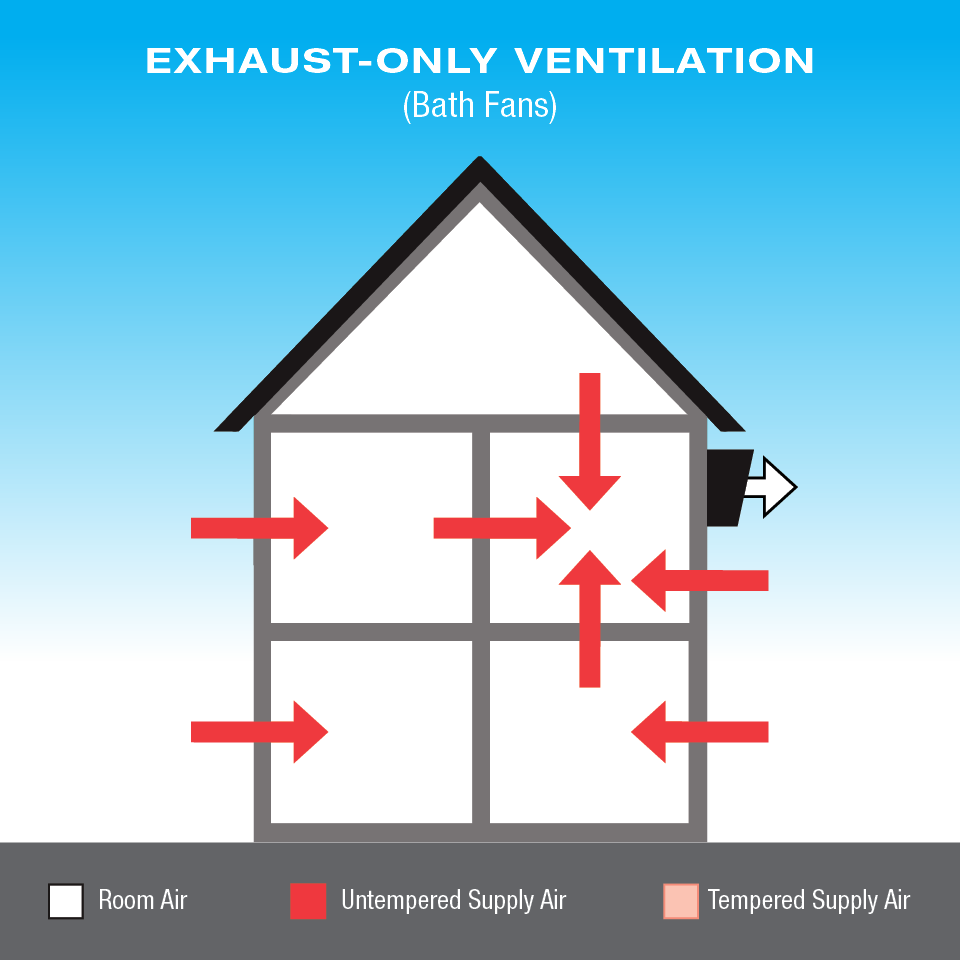
In exhaust-only applications, contaminated air is propelled or exhausted out. A bath fan uses the exhaust-only method when it releases contaminants like humidity from showers or bioeffluents. While exhaust-only applications do expel harmful contaminants, they don’t bring in any new clean air into the environment.
Balanced Ventilation
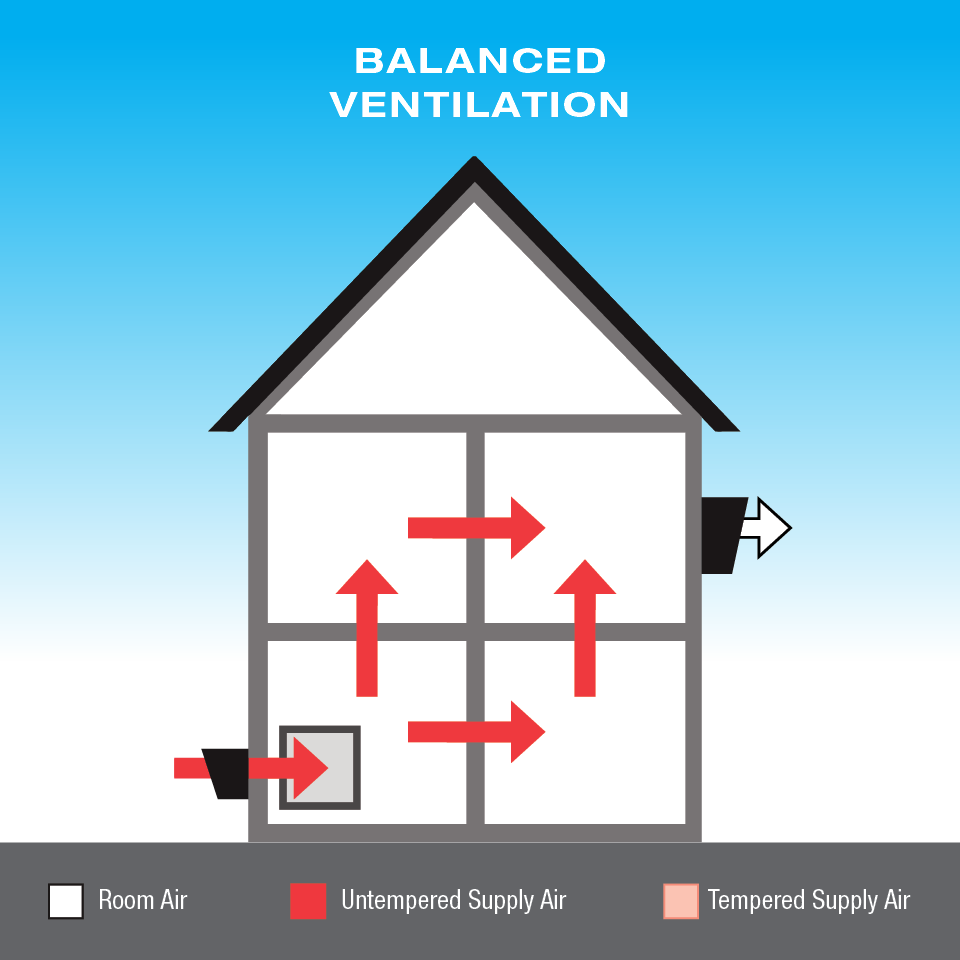
Balance ventilation offers a push- pull system, where stale contaminated indoor air is removed and replaced with clean, fresh air. Generally, but not always, this system is equipped with a filtration system that will work to purify the air. The only downside to balanced ventilation is that it doesn’t temper the incoming air, which increases both energy use and operating costs.
Energy Recovery Ventilation
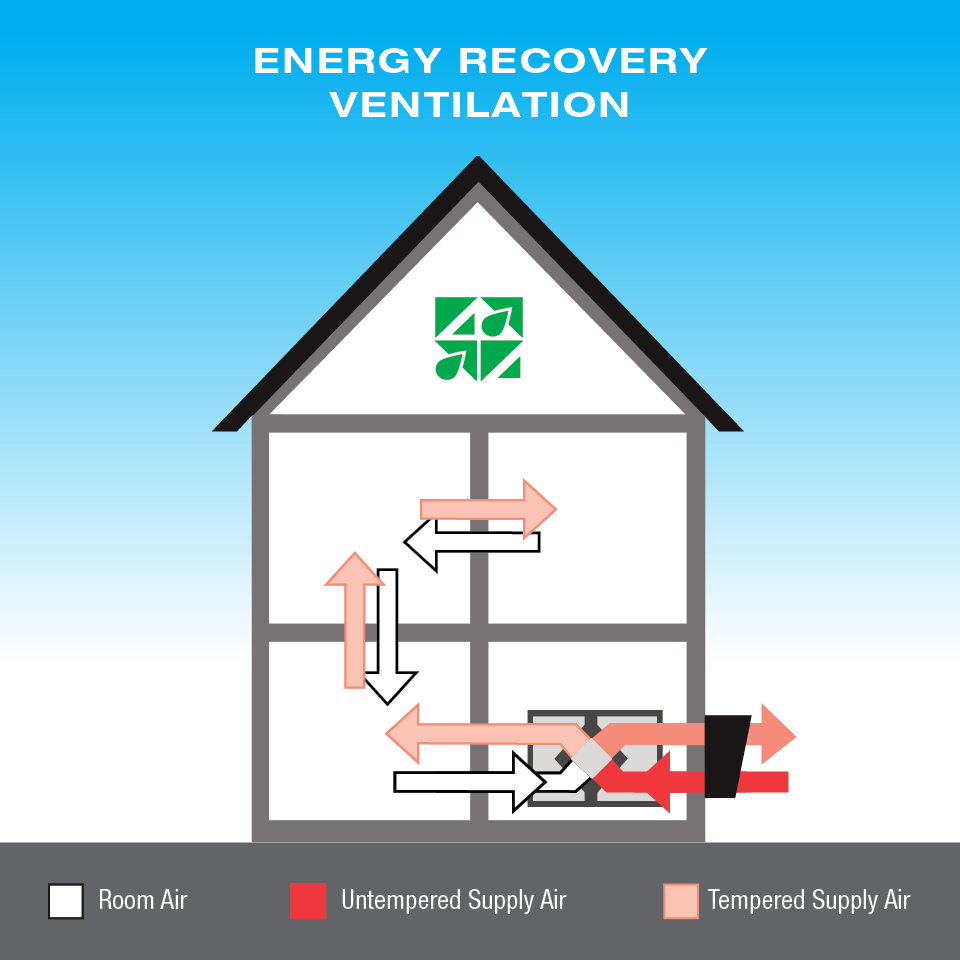
Increased and balanced ventilation is the premiere strategy to enhancing and improving indoor air quality. Like balanced ventilation, this strategy brings fresh, filtered outdoor air in. But, it also tempers the incoming airstream. In summer, the warm, humid outside air is precooled and dehumidfied by the outgoing cool interior air. Conversely, in the winter months, incoming air is preheated to save energy and lower costs.
How IAQ Can Impact IEQ
For engineers and architects alike, creating a space that rates high in indoor environmental quality (IEQ) is paramount. IEQ refers to a building’s indoor conditions and how they affect occupant health. These conditions can be of those who occupy it. Lighting, air quality, temperature, and sound are some examples of IEQ.
Frequently Asked Questions (FAQs)
Is indoor air really more polluted than outdoor air?
Yes. According to the U.S. Environmental Protection Agency (EPA, indoor levels of pollutants may be two to five times higher—and occasionally more than 100 times higher—than outdoor levels. This is particularly concerning because most people spend approximately 90% of their time indoors.
What are the most common indoor air pollutants?
Indoor pollution sources that release gases or particles into the air are the primary cause of indoor air quality problems. According to the U.S. Environmental Protection Agency (EPA), common pollutants include:
Biological Contaminants: Mold, dust mites, pet dander, and pollen.
Volatile Organic Compounds (VOCs): Gases from paints, cleaning supplies, and building materials (like formaldehyde).
Combustion Products: Carbon Monoxide (CO) and Nitrogen Dioxide (NO2) from fuel-burning appliances or tobacco smoke.
Particulate Matter (PM): Tiny particles from dust, smoke, or outdoor air that enters the building.
What are the symptoms of poor indoor air quality?
Symptoms can often be mistaken for the common cold or allergies. They include irritation of the eyes, nose, and throat, headaches, dizziness, and fatigue. Long-term exposure is linked to more respiratory diseases, heart disease, and even cancer. Research from the Harvard T.H. Chan School of Public Health also indicates that poor IAQ significantly impairs cognitive function and productivity.
How does an ERV improve indoor air quality?
An energy recovery ventilator (ERV) improves IAQ by providing increased ventilation while maintaining high energy efficiency. Effective IAQ management requires diluting indoor pollutants; however, simply increasing ventilation can significantly raise energy costs and impact thermal comfort.
An ERV solves this by using a static-core exchanger to transfer heat and moisture between two separate airstreams. This process ensures that as stale, contaminated indoor air is exhausted, it is replaced by fresh, filtered outdoor air that has been conditioned to match indoor comfort levels. This continuous exchange effectively reduces the concentration of indoor pollutants without the energy loss associated with standard fans or open windows.
What is the difference between balanced ventilation and exhaust-only ventilation?
Not all ventilation strategies are equal. According to the team at Lawrence Berkeley National Laboratory, there are key differences between exhaust-only and balanced ventilation strategies:
Exhaust-only ventilation: This is an “unbalanced” strategy that uses a fan to remove air from a space. This creates negative pressure, which can draw uncontrolled pollutants and moisture into the building through cracks and gaps in the structure.
Balanced ventilation: Systems like an ERV use two fans to simultaneously exhaust stale air and provide a verified, equal flow of fresh outdoor air. This maintains neutral pressure and allows for professional-grade filtration of the incoming air, preventing the moisture and indoor air quality (IAQ) problems associated with unbalanced systems.
Can an ERV help reduce VOCs and formaldehyde in a home?
Absolutely. Because VOCs and formaldehyde are constantly “off-gassing” from building materials and household products, they can quickly reach toxic concentrations in airtight modern homes. An ERV can provide a constant air exchange that dilutes these chemicals and flushes them out of the living space, replacing them with outdoor air that is naturally lower in these specific indoor contaminants.
Is there a way to check indoor air quality?
Yes, and it is a critical first step because indoor air quality is dynamic—it changes based on your activities, like cooking, cleaning, or even the outdoor climate. As Ross Tretheway from Ask This Old House explains, homeowners can use consumer-friendly IAQ monitors as a “first line of defense” to track six or seven key proxies for air quality:
Carbon Dioxide (CO2): An indicator of how much “stale air” is being rebreathed.
Particulate Matter (PM): Tiny particles from smoke or cooking.
VOCs: Off-gassing from furniture, carpets, or household sprays.
Radon, Temperature, and Humidity.
These monitors provide real-time data and can show immediate spikes from daily activities. If these proxies stay consistently above healthy thresholds, it indicates that increased ventilation is needed, and it may be time to consult a professional for a targeted IAQ strategy.
Related Blog Posts

[loop_index]
Upgrading School HVAC Systems Keeps Students in Class and Out of the Nurse’s Office.
Schools that improve their ventilation systems have experienced better attendance and healthier learning environments. Ryan Majewski – General Manager, CWF Restoration After dealing with over 10,000 property restoration cases since […]