
How Animal Care Facilities Can Improve Ventilation and Cut Costs with ERVs
Achieve 10–20 Air Changes Per Hour (ACH) Without the Energy Penalty
The Animal Care Challenge: Why IAQ is Non-Negotiable
Maintaining healthy indoor air quality (IAQ) is a constant battle for veterinary clinics and shelters. From pet dander to odors to infectious bio-aerosols, animal care facilities are full of indoor air contaminants. When combined with moisture and/or cleaning chemicals, these contaminants create a high-risk environment.
According to the American Veterinary Medical Association (AVMA), proper ventilation is vital to maintain IAQ because it “removes heat, dampness, odor, airborne microbes, and pollutant gases such as ammonia and carbon monoxide.” However, as modern buildings utilize air-tight building envelopes for energy efficiency, these pollutants stay trapped inside. This creates a “pathogen soup” that compromises animal health, staff comfort, and the professional reputation of the business.
Meeting AVMA Standards with 100% Outdoor Air Ventilation
To ensure optimal IAQ and disease containment, leading veterinary authorities—including the Association of Shelter Veterinarians (ASV) and the NIH Design Requirements Manual—specify 10 to 20 room air changes per hour (ACH) for animal housing and clinical spaces. In line with these operational needs, standard facility guidelines and the International Mechanical Code (IMC) explicitly mandate that “room air should not be recirculated unless it has been properly treated.
Because ventilation requirements shift dramatically based on the specific layout and amenities within a footprint, compliance strategies must account for the multi-zone prescriptive rates established by ASHRAE Standard 62.1-2022 (Ventilation for Acceptable Indoor Air Quality):
ASHRAE 62.1 Prescriptive Airflow Rates
| Occupancy Category | People Rate (Rp) CFM/Person | Area Rate (Ra) CFM/ft² | Default Occupant Density People/1000 ft² | Max CO2 Above Ambient ΔCb.1 (ppm) |
|---|---|---|---|---|
| Animal exam room (veterinary office) | 10 | 0.18 | 20 | N/A * |
| Office space | 5 | 0.06 | 5 | 900 |
| Office breakrooms | 5 | 0.12 | 25 | 600 |
| Reception areas | 5 | 0.06 | 30 | 600 |
| Main entry lobbies | 5 | 0.06 | 10 | 900 |
* Note on Animal Facilities: Per ASHRAE 62.1 Addendum ab, CO2 demand controlled ventilation (DCV) is not applicable (N/A) in animal occupancy zones. Because animals generate non-human CO2 emissions, standard sensors cannot reliably track human bioeffluents to regulate outdoor air intake safely. Continuous increased ventilation via energy recovery ventilators is recommended to control airborne dander, paths, and persistent odors. All data is derived ANSI/ASHRAE Addendum ab to ANSI/ASHRAE Standard 62.1-2022.
RenewAire energy recovery ventilators (ERVs) can address these challenges. Our systems provide balanced ventilation, delivering a steady stream of 100% fresh, filtered outdoor air to replace stale, contaminated indoor air. By utilizing a static-plate core—which physically separates airstreams to avoid cross-contamination—RenewAire ERVs meet AVMA and ASV standards. They effectively exhaust contaminants while recycling up to 70% of the energy from the exhaust air, allowing your facility to achieve high air-exchange rates without the massive energy penalty of traditional HVAC systems.
Key Benefits of RenewAire ERVs
- Flush Out Ammonia and Odors via 100% Fresh Air Standard HVAC systems often recirculate indoor air, trapping strong odors and leading to Sick Building Syndrome (SBS). To eliminate heavy pollutants like ammonia—which settles directly in the animal “breathing zone”—stale indoor air must be completely replaced. RenewAire ERVs introduce a continuous stream of 100% outdoor air, utilizing a proven strategy to dilute and flush out gaseous toxins that filters alone cannot capture.
Lower the Risk of Disease & Cross-Contamination: The Association of Shelter Veterinarians (ASV) warns that stagnant air increases the concentration of infectious organisms like Bordetella. RenewAire ERVs allow for a “Front-to-Back” pressure strategy: keeping lobbies at positive pressure and isolation wards at negative pressure. This ensures that contaminated air is exhausted directly outside rather than leaked into clean zones, while our static-plate core physically separates airstreams to prevent cross-contamination.
The Layered IAQ Approach: Combine high-efficiency MERV 13 filtration with mechanical ventilation. While the system’s filter traps physical dander and dust, the balanced ventilation cycle constantly exhausts the biological load and chemical fumes. All of this happens across a static-plate core that transfers energy—not contaminants—protecting the health of both animals and staff.
Stabilize Humidity and Comfort: Managing moisture is vital for patient recovery and pathogen control. RenewAire technology tempers incoming outdoor air by transferring both heat and latent energy (moisture) from the exhaust stream. This assists your primary HVAC equipment in keeping relative humidity within the ideal 30% to 70% range—the “sweet spot” that inhibits the growth of bacteria and viruses while keeping animals comfortable.
Meet the Workhorse: The HE15 ERV
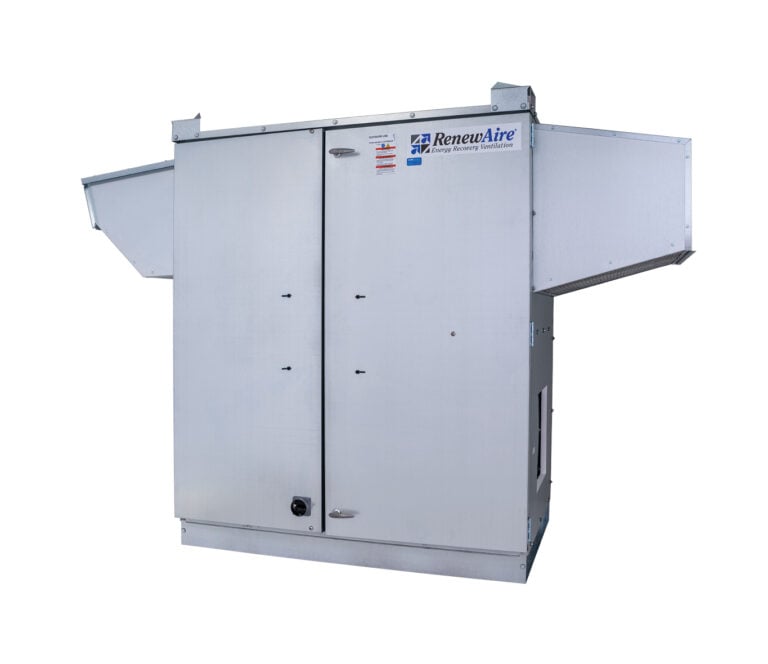
The RenewAire HE15 energy recovery ventilator is engineered for high-load commercial environments.
- High-Capacity Airflow: Available in indoor or rooftop installations, this ERV delivers 369–1,621 CFM, it is sized for clinics, kennel blocks, and retail pet centers.
- Precision Efficiency: Featuring EC motorized impellers, it consumes up to 34% less power than previous models.
- Reliability: With no moving parts in the core and a 25+ year expected lifespan, it stands up to rigorous 24/7 demands. Plus, the HE15 comes with an industry-leading 10-year warranty on its core, and 2-year warranty on the commercial parts.
Proven Success: Broome County Humane Society
When the Broome County Humane Society (BCHS) faced a common dilemma: they needed frequent air changes to eliminate odors and pathogens, but they couldn’t afford the massive energy bills associated with traditional ventilation. By installing RenewAire ERVs, they were able to provide
- Optimum IAQ: 100% outdoor air throughout the facility.
- Effective Isolation: No cross-contamination between intake and exhaust streams.
- Sustainable Savings: Significant reduction in heating and cooling costs.
“We definitely wanted better air exchange in the new building, but energy recovery was equally important to reduce the cost of cooling or heating the significantly larger amounts of outdoor air we needed for optimum IAQ,” said Karen Matson of BCHS.
Animal Care Downloads: Case Studies, Videos, and Technical Resources
Case Studies
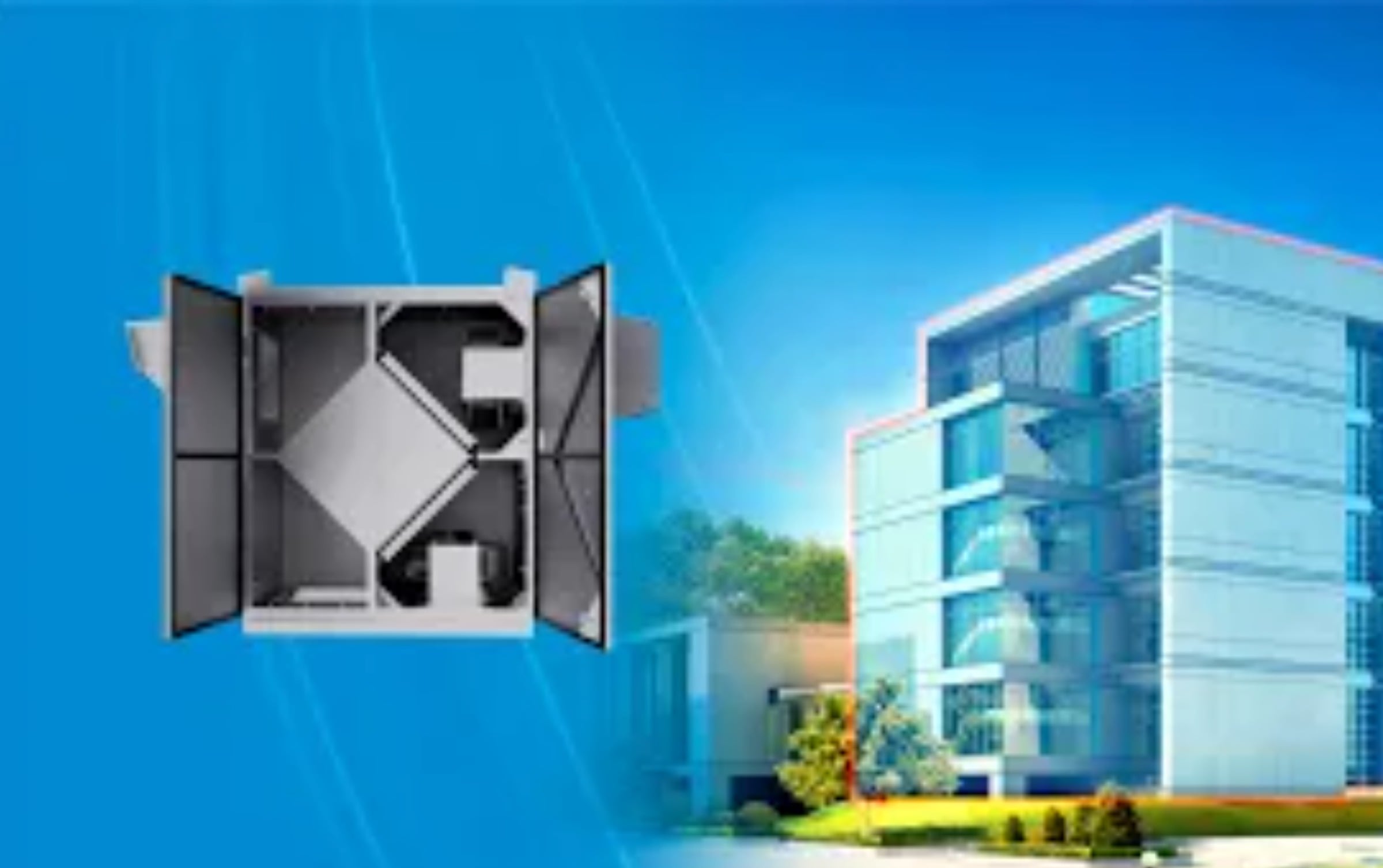
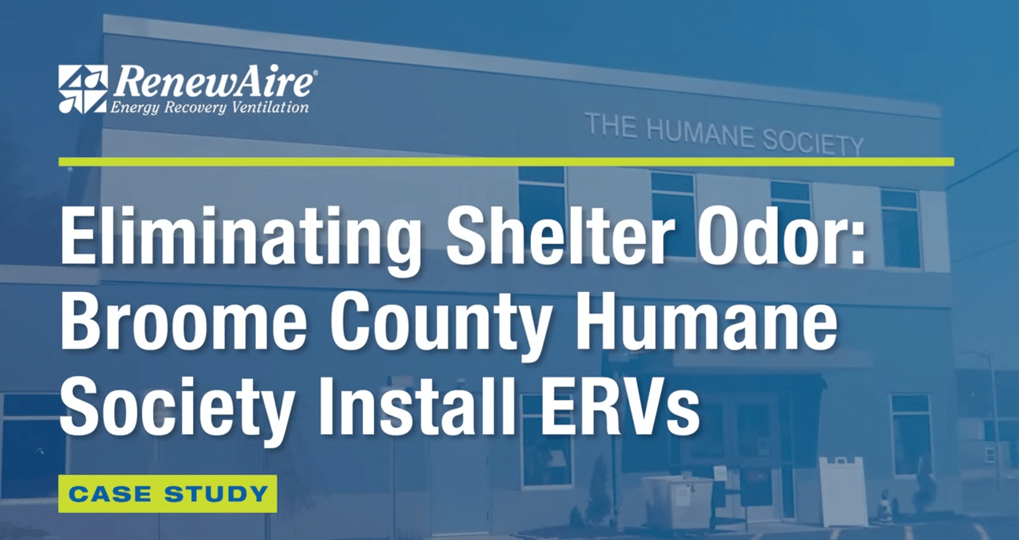
Broome County Humane Society (BCHS)‘s state-of-the-art HVAC redesign enhances animal health and indoor air quality (IAQ).
To attain net-zero status and save energy, the Bosage Family Education Center at the Coastal Maine Botanical Gardens installed RenewAire energy recovery ventilators (ERVs).
White Papers
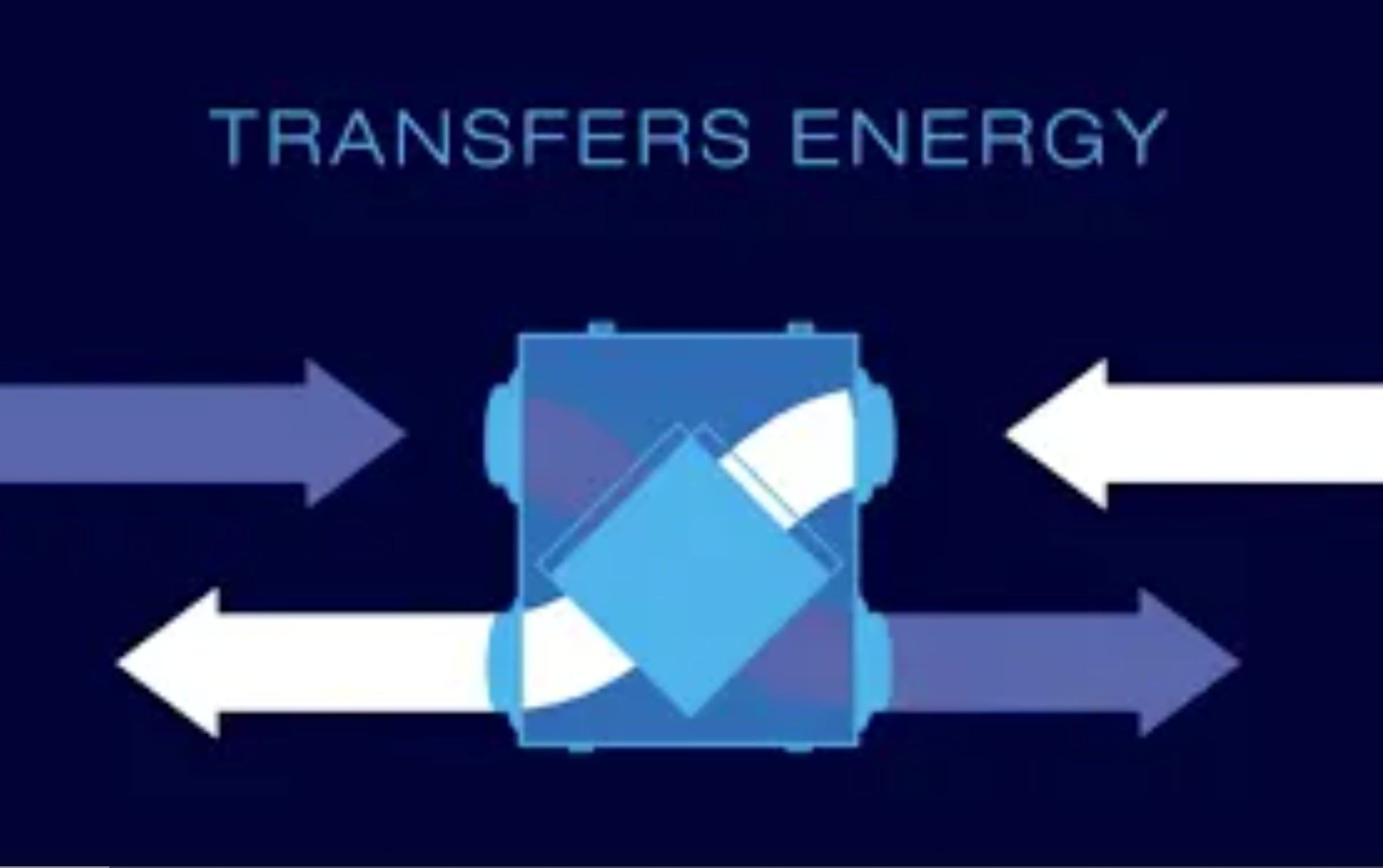
Protect patients and staff from the “Pathogen Soup.” Learn why standard HVAC systems often fail in high-density environments and how 100% fresh-air exchange can transform your animal care facility.
Bringing Hospital-Grade Safety to Animal Care. Hospitals face extreme risks from deficient IAQ due to high occupant density and airborne pathogens. Download this white paper to learn how the same ventilation strategies used in human surgical suites can protect your veterinary facility from cross-contamination and “pathogen soup.”
Don’t let efficiency compromise health. Advanced weather-stripping and spray-foam insulation save money by keeping the elements out—but they also keep contaminants in. Discover how to balance a high-performance building envelope with 100% fresh-air exchange in this detailed white paper.
Blog Posts
Veterinary clinics and animal shelters face an onslaught of airborne germs, dander, and heavy ammonia gases. Discover how ERVs can exhaust airborne pathogens to protect shelter residents and staft.
Upgrading a ventilation system is a major decision for any animal care director. These facilities require frequent and costly air changes. Choosing the wrong system can lead to massive energy bills.
Pet health begins with the air they breathe—discover why indoor air quality is the missing piece of your pet care checklist.
Pet health begins with the air they breathe—discover why indoor air quality is the missing piece of your pet care checklist.
Ready to install an ERV at your facility?
Our Technical Sales Support team is here to answer any additional questions you might have about installing an HE15 ERV in your building or to assist you in finding the RenewAire Representative in your area.
Frequently Asked Questions (FAQs)
Why is indoor air quality so critical in animal care facilities?
Animal care facilities like veterinary clinics, shelters, and boarding kennels deal with high concentrations of bio-aerosols, pet dander, fur, moisture, and hazardous gases like ammonia from waste. Because animals breathe closer to the floor where heavy pollutants settle and have higher resting respiratory rates, stagnant air significantly increases the risk of cross-contamination, disease transmission, and respiratory distress for both patients and staff.
According to guidelines from the American Veterinary Medical Association (AVMA), adequate ventilation is necessary to control heat, dampness, and harmful gases in clinical and shelter environments. Research supported by the Association of Shelter Veterinarians (ASV) links poor air exchange directly to higher pathogen counts and increased outbreaks of upper respiratory infections like Kennel Cough (Bordetella). Continuous dilution with fresh outdoor air removes trapped bio-aerosols and supports a healthier, safer environment.
How many air changes per hour (ACH) are required for a veterinary clinic or animal care facility?
According to the AVMA Companion Animal Care Guidelines, animal facilities should maintain 10 to 20 room air changes per hour (ACH). Achieving this high rate with a traditional HVAC system can be cost-prohibitive. RenewAire ERVs make these high air-exchange rates sustainable. Our systems recover up to 70% of the energy from the exhaust air to pre-condition incoming fresh air. Consequently, facilities achieve clinical standards without a massive energy penalty.
How does the AVMA standard for animal shelters affect ventilation design?
AVMA and ASV standards require specific air change rates to control pathogens and odors. RenewAire ERVs can help meet these standards by providing continuous, balanced outdoor air ventilation while recovering energy from exhaust, ensuring compliance without spiking utility costs.
Why is ammonia a specific threat in animal shelters and kennels?
Ammonia is a significant respiratory irritant. Because it is heavier than air, it settles near the floor in the animal “breathing zone.” According to The Ohio State University, prolonged exposure can damage respiratory cilia. This damage makes animals more susceptible to bacterial infections.
However, ammonia is just one part of a complex “aerosolized cocktail” found in shelters and clinics. According to the Journal of the American Veterinary Medical Association (JAVMA) and ASPCAPro, facility directors must manage a multi-layered threat:
Gaseous Contaminants: This includes ammonia from waste and volatile organic compounds (VOCs). These often come from the heavy disinfectants and “sanitizing” chemicals used in floor cleaning.
Bio-Aerosols & Particulates: Dander, fur, and microscopic droplets carrying pathogens like Bordetella or canine influenza.
Environmental Pollutants: Fine particulate matter (PM2.5) that can infiltrate from outdoors and exacerbate pre-existing conditions like feline asthma.
The Energy Recovery Solution
While high-efficiency filters can trap physical particulates, they cannot neutralize gaseous toxins like ammonia or cleaning fumes. As noted by Pet Boarding & Daycare, the only way to truly “clear the air” is through 100% fresh-air exchange. A RenewAire ERV physically exhausts these trapped gases. It replaces them with clean, outdoor air. This process ensures the “breathing zone” remains safe for both patients and staff.
What ventilation system is best for a veterinary clinic or shelter?
The ideal setup for an animal care facility is a balanced ventilation system with energy recovery. Using a RenewAire energy recovery ventilator (ERV), like an HE Series, allows for stale room air to be continuously exhausts out, while supplying 100% fresh, filtered outdoor air. And, ERVs can do this without recirculating air across critical care zones.
In high-density animal environments, traditional recirculation HVAC systems can spread airborne pathogens and lingering ammonia odors between isolation wards, surgical suites, and waiting areas. Installing a RenewAire static-plate core ERV ensures physical separation between incoming and outgoing airstreams, preventing near 0% cross-contamination while regulating humidity levels to inhibit mold and bacterial growth.
How can an ERV help manage the risk of Kennel Cough (Bordetella) and other respiratory infections?
While no ventilation system can completely eliminate the spread of disease, an ERV is a critical component in a facility’s infection control strategy. Kennel Cough is often not a single pathogen but a “CIRD Complex” involving various bacteria and viruses (such as Bordetella bronchiseptica, parainfluenza, and adenovirus) that thrive in high-density, poorly ventilated environments.
The Multi-layered Solution
According to ASPCAPro, these infectious agents are primarily spread through respiratory droplets and aerosols. An ERV helps mitigate this risk in three specific ways:
Dilution of Pathogen Load: By providing a continuous stream of 100% outdoor air, an ERV dilutes the concentration of bio-aerosols. As noted by the Association of Shelter Veterinarians (ASV), increasing fresh air exchange lowers the “germ load.” This protects both the animals and the staff.
Strategic Pressure Mapping: ERVs allow for a “Front-to-Back” pressure strategy. By maintaining negative pressure in isolation wards, the system ensures contaminated air is exhausted directly outside. This prevents air from leaking into “clean” zones like the lobby or treatment rooms.
Stress Reduction through Comfort: Stress is a major factor in an animal’s susceptibility to CIRD. RenewAire ERVs manage humidity and temperature to maintain a stable, comfortable environment. This stability helps support a healthy immune response in boarding or recovering animals.
By integrating an ERV into a layered IAQ approach, facility directors can significantly improve the respiratory environment. This strategy works best alongside proper sanitation and vaccination protocols.
Can an ERV help prevent respiratory infections in reptiles?
Yes. Stale, stagnant air is a leading cause of bacterial and fungal growth, which often results in upper respiratory infections (RI) in sensitive species. By providing a continuous “flush” of fresh, filtered outdoor air, a RenewAire ERV prevents the buildup of airborne pathogens. Because our static-core technology recovers humidity, you can maintain the high-airflow requirements needed to prevent infection without drying out the habitat.
How does a 100% outdoor air system impact an energy budget?
While 100% outdoor air systems usually require high energy loads, RenewAire ERVs recover the heat and humidity from the exhaust air to pre-condition the incoming fresh air. This allows the Broome County facility to maintain strict indoor air quality (IAQ) standards while significantly reducing its total energy consumption.
To learn more, visit: Renewaire.com/how-ervs-work/
What is the "Zoonotic Bridge" and how does ventilation protect staff?
The “Zoonotic Bridge” refers to the transmission of diseases from animals to humans. According to the Centers for Disease Control and Prevention (CDC), high-density animal environments put veterinary staff at increased risk. Continuous mechanical ventilation removes bio-aerosols—microscopic droplets containing germs—before they can be inhaled, providing a critical layer of safety for the humans in the building.
What is the typical payback period for an ERV in a commercial animal facility?
Because RenewAire ERVs significantly reduce the load on your primary heating and cooling systems, most commercial installations see a payback period of less than two years. Beyond the initial payback, an ERV acts as a long-term sustainable asset by lowering operational expenses for the life of the building. To see the full financial breakdown of how energy recovery impacts your bottom line, download our white paper on Calculating the Net Present Value (NPV) of ERVs.
Can I use portable air purifiers instead of a whole-building ERV?
While portable air purifiers with HEPA filters are helpful for trapping physical particulates like dander, they are a “point-of-use” solution that cannot address the primary clinical challenges of an animal care facility. Purifiers do not remove gaseous pollutants like ammonia or CO2, nor do they provide the 10–20 Air Changes per Hour (ACH) required by the AVMA. Only a balanced ERV system physically replaces stale, contaminated indoor air with 100% fresh outdoor air, while simultaneously managing the humidity levels that can otherwise foster the growth of bacteria and viruses.