
Why ERVs Are Needed in Senior Living Facilities
Improve indoor air quality and senior health without raising energy costs
Why Indoor Air Quality Is Critical for Senior Health
Research has shown that older adults are particularly susceptible to the health risks associated with poor indoor air quality (IAQ). Deficient IAQ can aggravate chronic health conditions in seniors, including asthma, lung disease, COPD, diabetes, heart disease, and cancer. Poor air quality can also increase the risk of cognitive impairment, and can lead to dementia and Alzheimer’s disease.
For residents and staff in senior living facilities, healthy IAQ is critical. Without proper ventilation, airborne viruses can linger in the air and build up in concentration over time. This buildup of pathogens dramatically increases the risk of disease outbreaks at long-term care facilities. Assisted living and nursing homes also have to contend with lingering odors, which can remain in the air and absorb into materials without sufficient ventilation.
Seniors spend about 95% of their time indoors, and indoor air can be two to five times more polluted than outdoor air. As energy-efficient buildings get tighter to seal weather out, they seal in contaminants, causing IAQ to deteriorate. Typical contaminants include off-gassing from building materials like paint and furniture, vapors from cooking and cleaning, and biological contaminants like mold, viruses, and excess CO2.
How to Improve IAQ for Senior Living
One of the best ways to enhance IAQ is through increased and balanced ventilation. This allows facilities to regularly bring in fresh outdoor air while expelling stale, polluted indoor air. According to the CDC, nursing homes should have 2–10 air changes per hour (ACH), depending on the room. ASHRAE Standard 62.1-2022 also provides minimum ventilation standards for facilities to achieve healthy indoor air quality:
ASHRAE 62.1 Prescriptive Airflow Rates
| Occupancy Category | People Rate (Rp) CFM/Person | Area Rate (Ra) CFM/ft² | Default Occupant Density People/1000 ft² | Max CO2 Above Ambient ΔCb.1 (ppm) |
|---|---|---|---|---|
| Health club/aerobics room | 20 | 0.06 | 20 | 1200 |
| Cafeteria | 7.5 | 0.18 | 67 | 900 |
| Kitchen | 7.5 | 0.12 | 5 | N/A |
| Lobbies | 7.5 | 0.06 | 30 | 1500 |
| Laundry rooms, central | 5 | 0.12 | 10 | N/A |
| Multipurpose assembly | 5 | 0.06 | 120 | 1800 |
| Bedroom/living room | 5 | 0.06 | 10 | 600 |
The problem with achieving these ventilation standards is how expensive it can be for facilities, especially in the summer and winter. Conditioning 80°F or 0°F outdoor air to room temperature several times an hour puts a high demand on a traditional HVAC system.
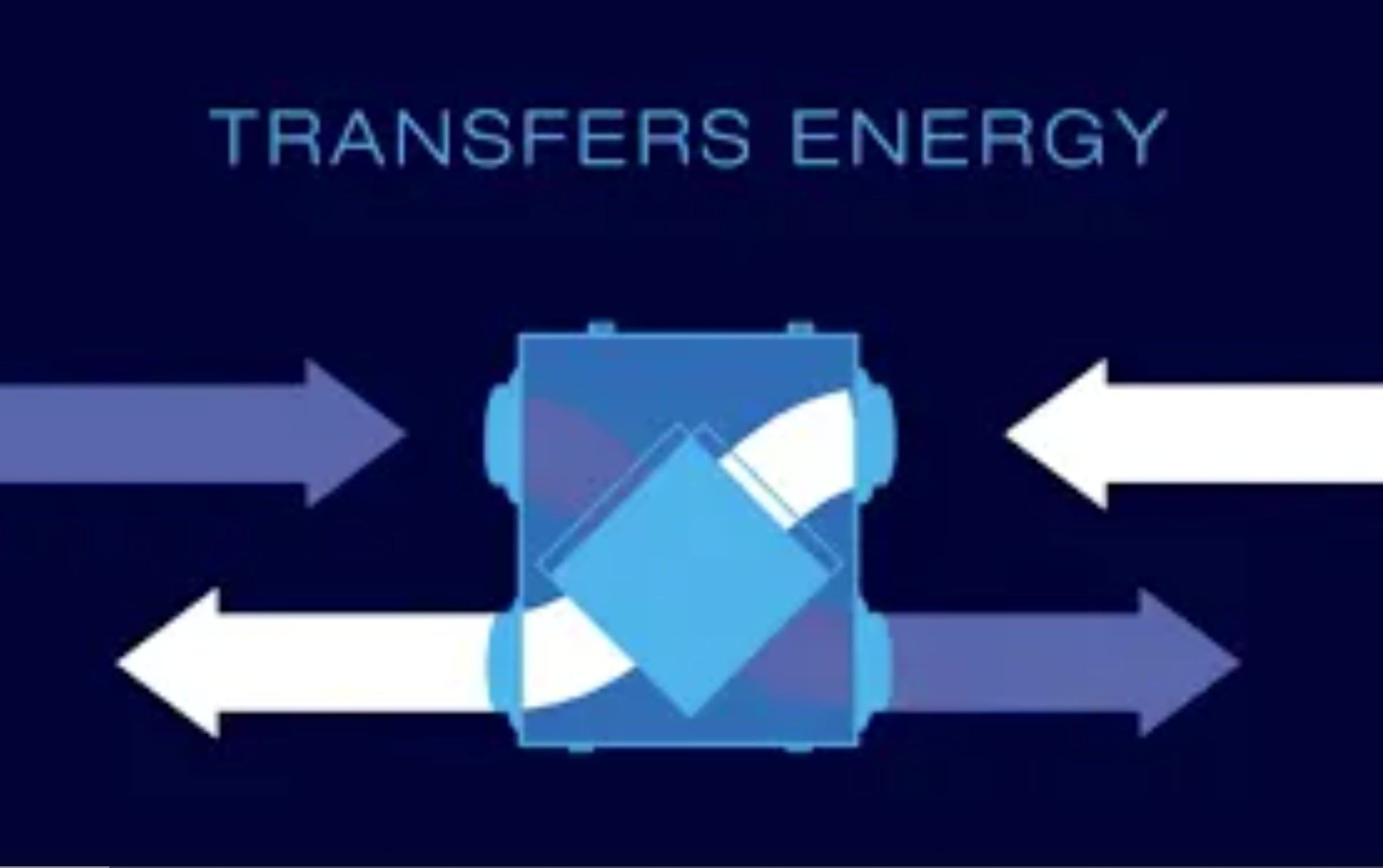
Fortunately, energy recovery ventilators (ERVs) are designed to help facilities achieve these standards energy-efficiently. An ERV is a mechanical ventilation system that recycles energy from outgoing room air and transfers it to incoming outdoor air. With ERVs, facilities can increase ventilation to expel airborne contaminants. In addition, RenewAire ERVs can reduce heating and cooling loads up to 70%.
By increasing ventilation using ERVs, nursing homes and assisted living communities can meet ventilation standards, enhance IAQ, and also save money on energy costs and HVAC equipment.
Key Benefits of RenewAire ERVs
-
Reduce Disease Transmission: With increased ventilation from ERVs, facilities can dramatically reduce the risk of disease transmission by expelling airborne pathogens.
-
Remove Odors: The solution to pollution is dilution achieved through ventilation. Paired with regular cleaning, ERVs can reduce lingering odors by regularly replacing stale, musty indoor air with fresh outdoor air.
-
Optimize Humidity and Comfort: Humidity control is vital for resident health and safety. RenewAire technology manages both temperature and latent energy (moisture), keeping relative humidity between the recommended 30% and 50%. This range allows for a comfortable living environment, helps to alleviate chronic health issues, and prevents mold growth.
-
Cut HVAC Costs: RenewAire ERVs capture the energy from outgoing airstreams, helping to reduce heating and cooling loads on HVAC systems up to 70%. This means saving up to 65% on ventilation energy costs. In addition, facilities can downsize their HVAC equipment since less energy is needed to bring outdoor air to room temperature.
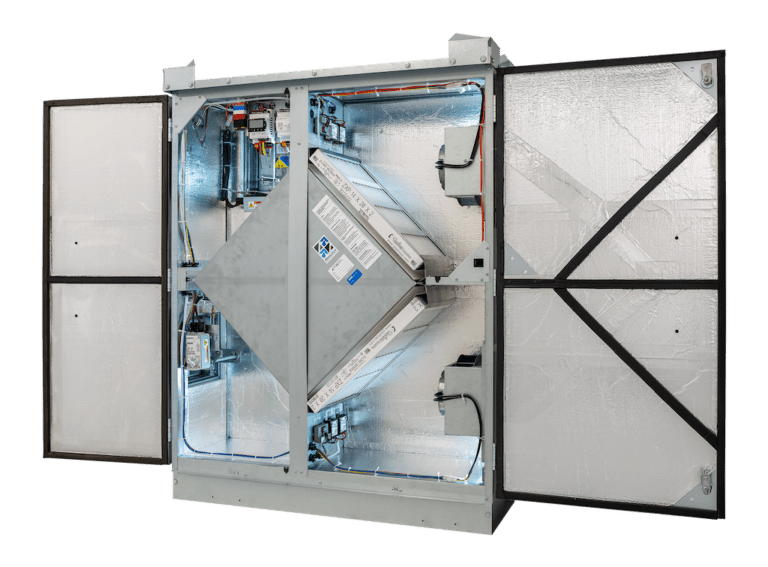
Ideal for Shared Living: The HE07 ERV
The RenewAire HE07 energy recovery ventilator delivers 166–694 CFM. This ERV is ideal for light commercial facilities with shared living environments.-
Advanced Core Technology: The heart of the unit features an L85-G5 static-plate core. Made from a specialized cellulosic-based material, our cores transfer heat and moisture with zero cross-contamination between airstreams.
-
Reliable Performance: With no moving parts in the core and a 25+ year expected lifespan, the H07 delivers reliable performance with easy maintenance. Plus, the unit comes with an industry-leading 10-year warranty on its core, and 2-year warranty on the commercial parts.
-
Highly Configurable: Available options and accessories include the HE+DX Integrated Coil System, advanced EC motorized impellers, isolation dampers, integrated programmable controls, bypass economizer, MERV 13 filters and more.
Proven Success: Brentwood Senior Living
Brentwood Senior Living in Wisconsin needed an HVAC system that delivered a high volume of outdoor air for resident health and safety. With humid summers and frigid winters, providing this fresh air could be quite expensive. By installing RenewAire ERVs, Brentwood was able to deliver:
- Comfortable IAQ: Full resident satisfaction with the indoor air quality
- Humidity Control: Excess humidity was quickly reduced to healthy levels
Energy Savings: Significant reduction in heating and cooling costs
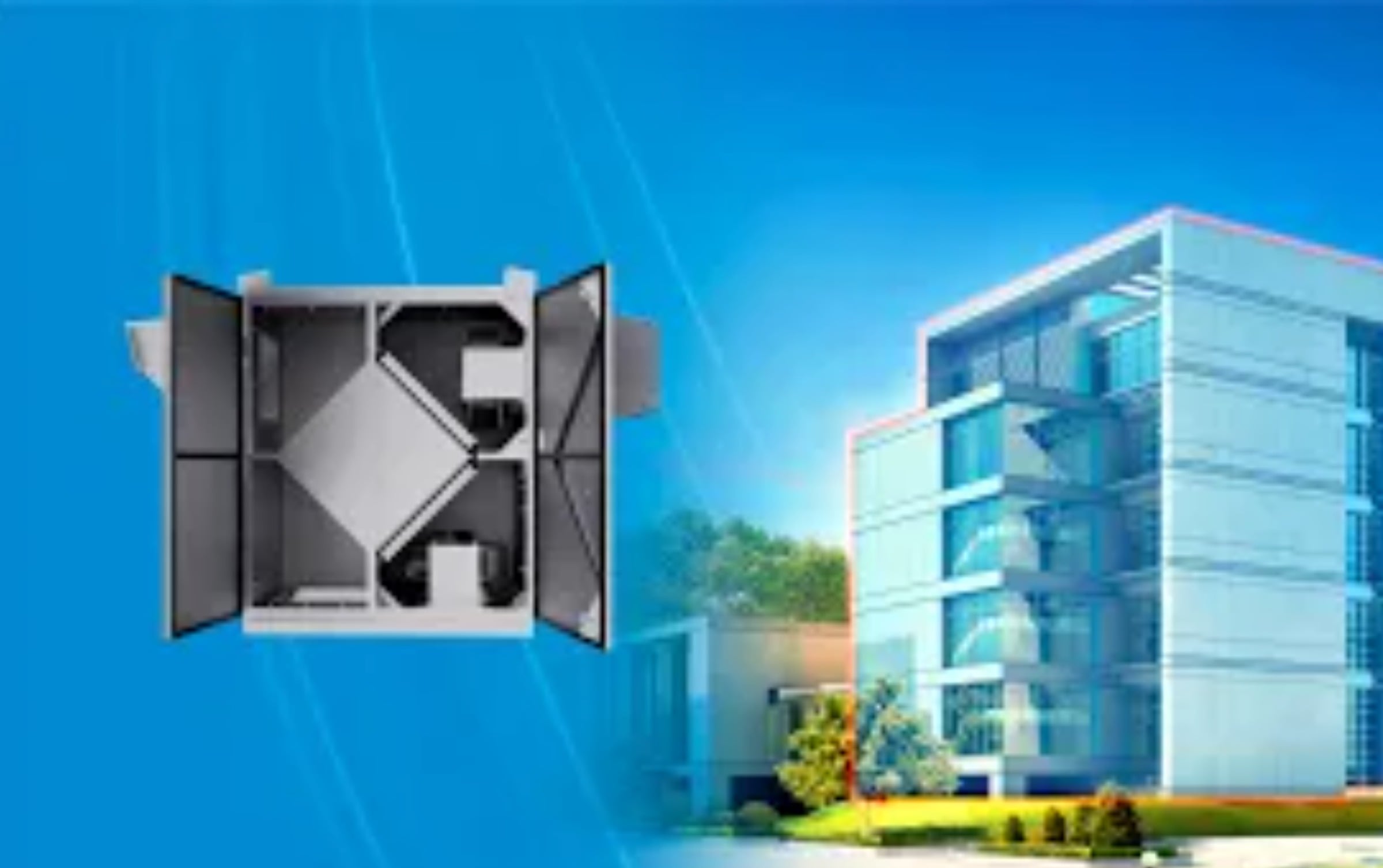
Senior Living Downloads: Videos, Case Studies, and Technical Resources
Blog Posts
Providing a healthy and comfortable environment is crucial for senior living communities. In this blog post, we discuss how ERVs can lower energy costs while increasing ventilation and improving their IAQ.
Seniors are more vulnerable to the effects of poor IAQ. In this blog post, we discuss how to identify common pollutant sources and effective strategies for optimizing indoor environments.
Case Studies
Struggling to provide 100% outdoor air in an energy-efficient manner, the Lakeview Manor Nursing Home found their solution with RenewAire ERVs.
After installing RenewAire ERVs, Brentwood Senior Living greatly improves their IAQ to control humidity levels and reduce the spread of germs.
In desperate need of HVAC upgrades, Beaver Valley Nursing Center turned to RenewAire’s energy recovery technology for their retrofit needs.
White Papers
Protect patients and staff from the “Pathogen Soup.” Learn why standard HVAC systems often fail in high-density environments and how 100% fresh-air exchange can transform your senior living facility.
Bringing Hospital-Grade Safety to Senior Living Facilities. Hospitals face extreme risks from deficient IAQ due to high occupant density and airborne pathogens. Download this white paper to learn how the same ventilation strategies used in human surgical suites can protect your senior living community from cross-contamination.
Don’t let efficiency compromise health. Advanced weather-stripping and spray-foam insulation save money by keeping the elements out—but they also keep contaminants in. Discover how to balance a high-performance building envelope with 100% fresh-air exchange in this detailed white paper.
Ready to install an ERV at your facility?
Our Technical Sales Support team is here to answer any additional questions you might have about installing ERVs in your building or to assist you in finding the RenewAire Representative in your area.
Frequently Asked Questions (FAQs)
What are the ventilation requirements for senior living facilities?
Senior living facilities are governed by different standards based on their level of care. Nursing homes are considered health care facilities and have strict ventilation requirements from ASHRAE Standard 170. Independent and assisted living facilities are classified under ASHRAE Standard 62.1, which applies to commercial and multi-family buildings. This is because these facilities typically do not provide health care services.
The CDC also recommends that facilities should maintain a minimum of 5 or more air changes per hour (ACH). For nursing facilities, this minimum can reach 10 air changes per hour in specialized rooms like bathrooms, laundry rooms, and food preparation facilities.
Achieving these air change rates with a traditional HVAC system can be cost-prohibitive, but with RenewAire ERVs these high air-exchange rates become sustainable. Our systems recover up to 70% of the energy from the exhaust air to pre-condition incoming fresh air. As a result, facilities can achieve healthy living standards without a massive energy penalty.
What are ventilation strategies for assisted living facilities?
Ventilation Snapshot: Exhaust-Only vs. Balanced vs. Energy Recovery
| Operational Metric | Exhaust-Only | Balanced Ventilation | Energy Recovery Ventilation |
| Airflow Control | Uncontrolled Supply | Controlled Supply and Exhaust | Controlled Supply and Exhaust |
| Air Filtration | None (Air leaks through building cracks) | High (Air passes through filters) | High (Air passes through filters) |
| Humidity Control | Poor (Does not pre-condition outdoor air) | Poor (Does not pre-condition outdoor air) | Excellent (Pre-conditions humid or dry incoming air) |
| Energy Efficiency | Low (Expels 100% of conditioned air) | Low (Expels 100% of conditioned air) | High (Reclaims up to 70% of energy from outgoing air) |
| HVAC Energy Costs | High costs (Fully heating and cooling incoming air) | High costs (Fully heating and cooling incoming air) | Reduced costs (Incoming air is tempered) |
How do senior living facilities manage humidity?
Seniors are highly sensitive to extreme humidity levels. Maintaining humidity between 30% and 50% is vital. Air that is too dry irritates the respiratory tract and compromises the nasal passages’ defense against infection, while air that is too humid exacerbates chronic health issues and promotes mold growth and dust mites.
With a balanced ERV ventilation strategy, both heat (sensible energy) and humidity (latent energy) are transferred between incoming and outgoing airstreams. In the humid summer, the system dehumidifies incoming fresh air. In the dry winter, incoming air is humidified through the ERV core. This allows facilities to avoid humidity extremes in the hottest and coldest months of the year.
How does poor air quality affect cognitive health?
Because older adults spend the vast majority of their time indoors and possess less physiological resilience, they are uniquely vulnerable to the neurological effects of airborne pollutants.
In poorly ventilated senior living spaces, CO2 levels can build up quickly. High concentrations of CO2 act as a mild sedative, directly impairing executive function, decision-making, and complex problem-solving.
In seniors, long-term exposure to air pollutants affects cognition over time. This often manifests as sudden brain fog, increased confusion, lethargy, or difficulty following conversations during group activities. In addition, there’s a growing body of research that suggests a correlation between poor IAQ and dementia.
Can I use portable air purifiers instead of a whole-building ERV?
While portable air purifiers with HEPA filters are helpful for trapping airborne particulates, they only offer a local solution for a small area. Purifiers do not remove gaseous pollutants like ammonia or CO2, nor do they provide the 5 air changes per hour (ACH) recommended by the CDC.
To achieve clean indoor air for a full facility, the most effective way air is through balanced ventilation and filtration. With an ERV system, stale indoor air is continually replaced with fresh, filtered outdoor air and while also maintaining a healthy humidity level.
What is the typical payback period for an ERV?
Because RenewAire ERVs significantly reduce the load on your primary heating and cooling systems, most commercial installations see a payback period of less than two years. Beyond the initial payback, an ERV acts as a long-term sustainable asset by lowering operational expenses for the life of the building. To see the full financial breakdown of how energy recovery impacts your bottom line, download our white paper on Calculating the Net Present Value (NPV) of ERVs. This resource helps facility directors justify the investment through documented energy-load reduction and equipment longevity.