
Code-Compliant C-Store Ventilation Without the Energy Penalty
RenewAire ERVs deliver exceptional indoor air quality while cutting ventilation energy costs by up to 70%—protecting your store climate, customer experience, and bottom-line margins.
The Convenience Store Challenge: Modern Retail Hurdles
Air Quality and Odor Control in Food Retail
- Hygiene and Odor Concerns: Customers consistently rank store hygiene as a top priority. Without increased ventilation and proper air changes, lingering restroom smells and tobacco off-gassing from inventory remain trapped indoors, creating a persistent air quality problem that signals poor sanitation standards to arriving guests.
- Cross-Contamination in Foodservice: As stores transition to fast-casual hybrids, managing the air balance between commercial kitchen hoods and the retail floor becomes critical. Improper ventilation allows kitchen grease and heavy cooking odors to drift into main shopping aisles, negatively affecting the customer experience.
Managing External Fumes and Moisture Loads
- The Infiltration of Fuel Vapors: High door turnover is an operational reality for retail fueling facilities. Every time a customer enters or exits, vehicle emissions and fuel odors from pumping stations migrate indoors, settling into the retail space unless the building maintains proper pressure balancing.
- Operational Humidity Loads: Open-case drink coolers, beer caves, and frozen food aisles place a massive latent moisture load on convenience store operations. This humidity is further compounded in travel plazas that offer high-moisture amenities like showers and laundry facilities. If unmanaged through proper airflow and dilution, this moisture leads to refrigeration frost, slippery floors, and mold growth.
Ventilation Standards: The Blueprint for a Clean Retail Environment
Adhering to strict industry standards is a definitive strategy for protecting brand reputation as a clean, healthy destination. Leading chains prioritize sustainability and compliance by designing facilities around ASHRAE 62.1 2022 requirements. This standard dictates the minimum outdoor air required to effectively dilute indoor air pollutants, maintain occupant comfort, and improve overall indoor air quality (IAQ).
Because ventilation requirements shift dramatically based on the specific layout and amenities within a footprint, compliance strategies must account for the multi-zone prescriptive rates established by ASHRAE Standard 62.1-2022 (Ventilation for Acceptable Indoor Air Quality):
ASHRAE 62.1 Prescriptive Airflow Rates
| Occupancy Category | People Rate (Rp) CFM/Person | Area Rate (Ra) CFM/ft² | Default Occupant Density (P/1000 ft²) | Differential CO2 (ppm) |
|---|---|---|---|---|
| Retail (sales) | 7.5 | 0.12 | 15 | 600 |
| Cafeteria/fast-food dining | 7.5 | 0.18 | 70 | 300 |
| Kitchen (cooking) | 7.5 | 0.12 | 20 | 300 |
| Freezer and refrigerated spaces (<50°F [10°C]) | 5 | 0 | 0 | NR |
| Break rooms | 5 | 0.12 | 25 | 600 |
| Office space | 5 | 0.06 | 5 | 900 |
| Coin-operated laundries | 7.5 | 0.12 | 20 | 300 |
The RenewAire Solution: Slashing the Energy Cost of Fresh Air
According to an industry analysis by Best.Energy, convenience stores rank as the single most energy-intensive buildings in the global retail sector. Because these facilities operate on an “always-on” 24/7 schedule, managing the massive baseline energy usage of refrigeration, lighting, and specialized foodservice equipment is a constant operational challenge.
The True Cost of Ventilation
This energy crisis is severely compounded by the strict ventilation rates required to maintain code compliance and dilute indoor pollutants. Standard HVAC systems create a costly energy penalty: to pull in enough outdoor air to continuously dilute fuel odors, kitchen grease, and bathroom exhaust, the system must work overtime to condition that raw air. This process dumps expensive, climate-controlled indoor air right out the exhaust hood while forcing compressors and heating elements to run constantly.
How Energy Recovery Changes the Game
RenewAire energy recovery ventilators (ERVs) can help eliminate this energy penalty.
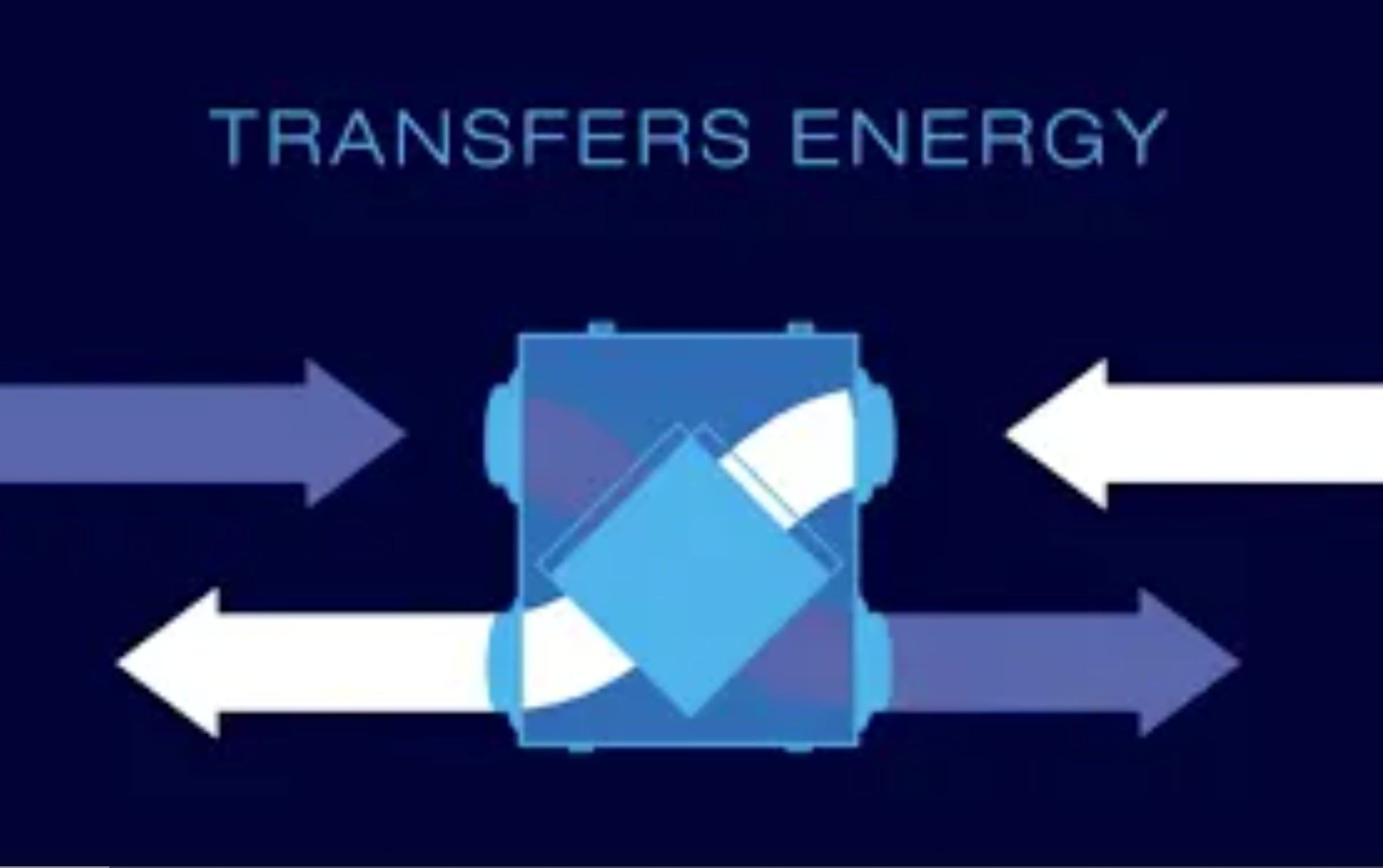
By utilizing a static-plate energy core to reclaim heating and cooling energy from the exhaust airstream, incoming fresh air is pre-conditioned before it ever reaches the HVAC equipment—turning a massive operational liability into a sustainable, cost-saving asset.
Cut Ventilation Energy Use by up to 70%: By transferring temperature and moisture between airstreams, RenewAire ERVs drastically reduce the thermal load on primary HVAC units. This optimization lowers utility bills, decreases equipment runtime, and extends the lifespan of the heating and cooling infrastructure.
0% Cross-Contamination Airstreams: A complete physical barrier ensures absolute isolation between incoming and outgoing air. Contaminated exhaust air, kitchen grease, and restroom odors are expelled entirely, while vehicle emissions and canopy fuel vapors are blocked from ever entering the ERV’s fresh supply airstream.
Precise Building Pressure Control: Fluctuations caused by sudden kitchen hood exhaust turbulence are automatically balanced. RenewAire ERVs keep restroom air neutral, prevent the infiltration of vehicle emissions from the fueling island, and lock out unconditioned humidity at the entry doors.
Optimized Environmental Comfort: Frequent door openings, 24/7 operating hours, and equipment heat gain often create uneven temperatures and erratic humidity levels. Maintaining stable indoor conditions ensures a premium customer experience and a comfortable working environment without driving up operational costs.
The RenewAire HE20 ERV
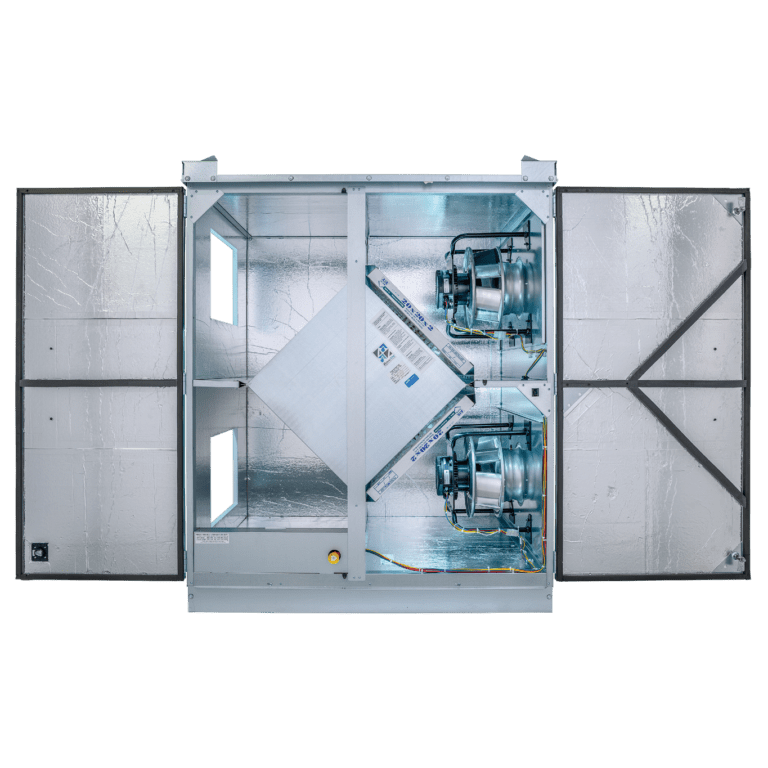
The RenewAire HE20 energy recovery ventilator is engineered specifically to stand up to the high-load operational demands of convenience stores, fueling stations, and travel plazas. By handling the disparate airflow requirements of multi-zone facilities simultaneously, this single commercial unit protects both indoor environmental quality and profitability.
HE20 Product Specifications
High-Capacity Multi-Zone Airflow: Delivering 500–2,200 CFM, the HE20 is precision-sized to manage complex commercial footprints, balancing air across the retail floor, public restrooms, and quick-service kitchens.
Flexible Configuration Options: Available in both indoor (HE20IN) and rooftop (HE20RT) configurations to easily accommodate varied building footprints, structural considerations, and mechanical room constraints.
Precision EC Motor Efficiency: Featuring electronically commutated (EC) motorized impellers, the system consumes significantly less power than previous-generation models. These motors are just one of several reasons why RenewAire ERVs typically achieve a payback period of less than two years and maximize the financial return on investment (ROI).
Commercial-Grade Reliability: Built with a static-plate core containing no moving parts, the HE20 features a 25+ year expected lifespan. The unit is backed by an industry-leading 10-year core warranty and a 2-year commercial parts warranty for long-term peace of mind.
Convenience Store Downloads: Case Studies, Videos, and Technical Resources
Case Studies
Wasilla’s Police Station’s state-of-the-art HVAC design minimizes off-gassing evidence and improves indoor air quality (IAQ).
In a smoky environment, St. Croix Casino ensure clean, healthy indoor air for guests with 0% cross-contamination.
White Papers
Discover how ERVs cut HVAC costs, lower construction expenses, and boost c-store sales through pristine air quality.
Protect customers and staff from “Exhaust Soup.” Learn why standard HVAC systems often fail in high-traffic retail environments and how 100% fresh-air exchange can transform your convenience store into a clean, odor-free destination.
In the fast-paced world of convenience stores, system reliability is the key to profitability. Download this white paper to discover how RenewAire’s “set-it-and-forget-it” ERVs maximize uptime with zero-wash static-plate cores and industry-leading reliability, ensuring your facility maintains peak energy efficiency and superior air quality for over 20 years.