
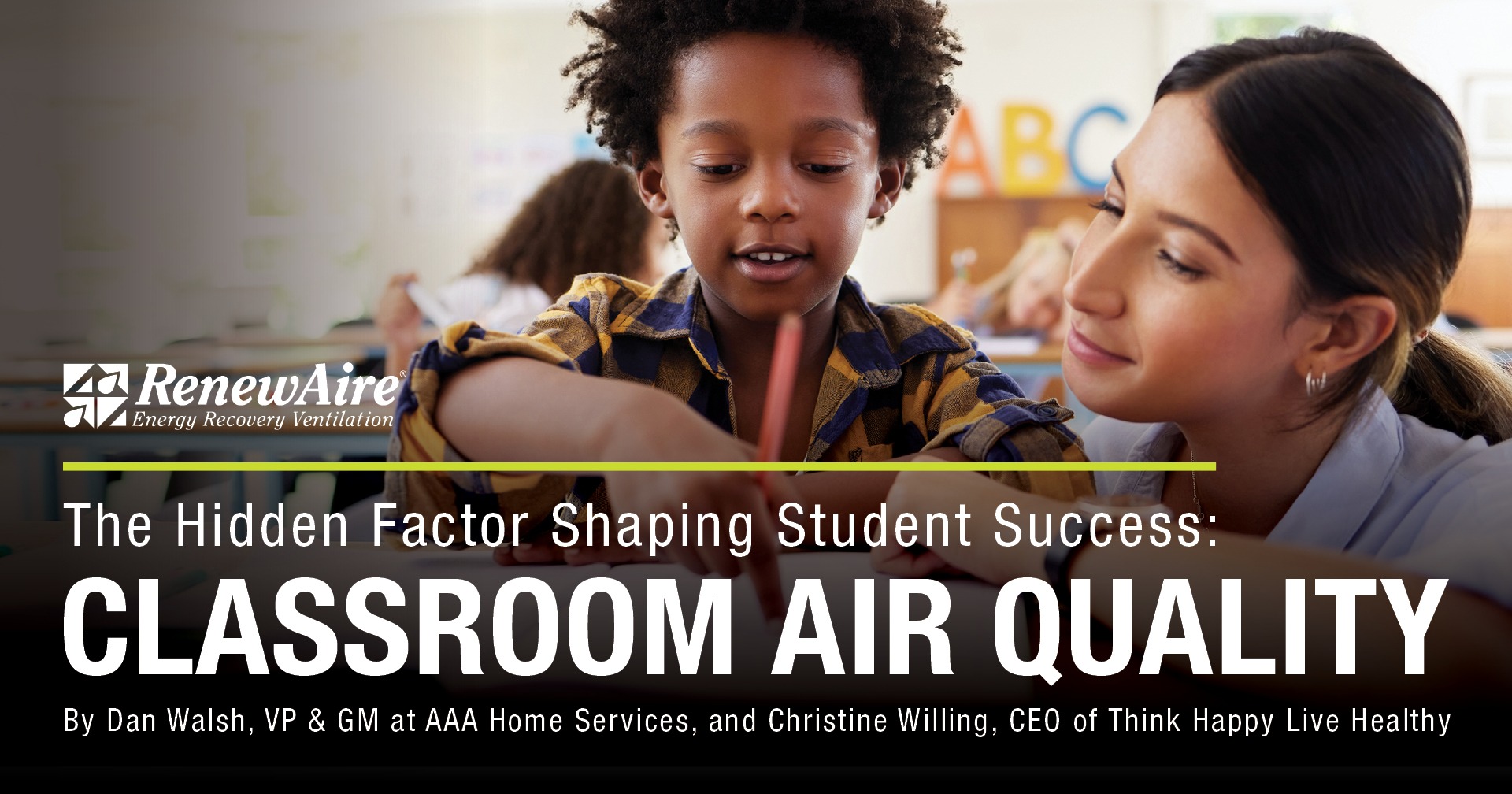
Indoor air quality in classrooms can impact student health, behavior, and test scores. Ventilation can reduce absences, boost focus, and improve learning.
Why Air Quality Matters in Schools
When we think about improving schools, conversations often center on curriculum, technology, or staffing. But there’s a silent, invisible factor that profoundly influences student health, behavior, and learning outcomes: the air they breathe.
For decades, school buildings across the U.S. have struggled with outdated ventilation systems. Poor air circulation can lead to high CO₂ levels, inconsistent temperatures, and an increased spread of airborne illnesses. The result? Students who feel sluggish, distracted, and more prone to illness.
Dan Walsh, VP & GM of AAA Home Services, has seen firsthand how modern energy recovery ventilators (ERVs) transform classroom environments. “When we install ERV systems in schools,” he explains, “teachers consistently report fewer sick days and better student attention spans within the first month.”
The Cognitive Cost of Poor Ventilation
Research and real-world results show a clear link between classroom indoor air quality (IAQ) and student performance:
- CO₂ Levels: In poorly ventilated classrooms, CO₂ levels often exceed 1,000 ppm—high enough to slow cognitive function. ERV systems keep levels below 800 ppm, helping students stay alert and engaged.
- Test Scores: Principals report measurable improvements in student performance following heating, ventilation, and air conditioning (HVAC) upgrades.
- Consistency: By eliminating drafts and hot/cold zones, ERVs reduce physical discomfort that can pull student focus away from learning.
Walsh also notes the impact during flu season: “Schools report 30–40% fewer absence days when proper air exchange removes viruses and bacteria before they can spread.”
Air Quality and Student Behavior
While HVAC experts see the physical benefits, school psychologists like Christine Willing witness the behavioral and emotional impact. With over seven years in Prince William and Fairfax County Public Schools, she has consistently observed how air quality shapes student outcomes.
“In poorly ventilated classrooms,” she shares, “behavioral referrals increased by about 40%. Attention-related issues were also far more common during evaluations.”
The benefits of better air don’t stop at focus and attention:
- Executive Functioning: Students in newer, well-ventilated schools scored higher on attention and working memory tasks.
- ADHD Accommodations: One middle school reduced ADHD-related accommodations by 28% after an HVAC upgrade.
- Emotional Regulation: Improved air circulation reduced student anxiety, meltdowns, and peer conflicts, creating healthier social environments.
“The testing data was clear,” Willing concludes. “Students in well-ventilated classrooms demonstrated stronger cognitive flexibility and processing speed—skills that directly impact academic success and reduce the need for costly special education interventions.”
Investing in Air=Investing in Students
Better IAQ isn’t just a facilities upgrade; it’s a strategic investment in student well-being, teacher satisfaction, and overall school performance. From higher test scores to fewer absences and behavioral issues, the evidence is undeniable: healthy air creates healthy learners.
School leaders who prioritize HVAC modernization aren’t just maintaining buildings—they’re shaping brighter futures.