
Providing a healthy and comfortable environment for residents is crucial for senior living communities. A key component to a safe living environment is indoor air quality (IAQ), which includes removing airborne contaminants like dust, germs and CO2. One of the best ways to improve IAQ is through ventilation—replacing stale, polluted indoor air with fresh, filtered outdoor air—but this can be expensive with higher heating and cooling costs. With energy recovery ventilators (ERVs), senior living communities can actually lower their energy costs while improving their IAQ.
What Is an Energy Recovery Ventilator?
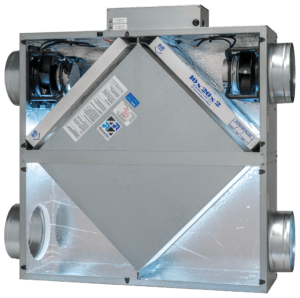
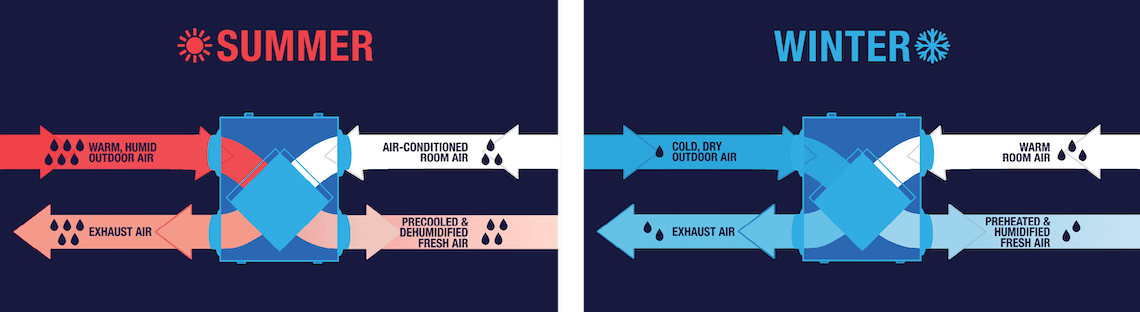
An ERV is a system that provides ventilation in an energy-efficient manner. ERVs regularly exchange stale indoor air with fresh outdoor air, helping to improve IAQ. Unlike traditional HVAC systems, ERVs transfer heat and moisture between incoming and outgoing airstreams, reducing the load on heating and cooling systems.
In summer, warm and humid outside air is precooled and dehumidified via the total energy from outgoing cool air. In winter, cold and dry outside air is preheated and humidified via the total energy from outgoing warm air. This means less energy is needed for conditioning and ventilation, and therefore HVAC equipment can be downsized.
Key Benefits of ERVs in Senior Living Facilities
Energy Efficiency and Cost Savings

For the average U.S. commercial building, HVAC systems account for 52% of total energy consumption. This represents one of the largest opportunities for facility managers to find energy-efficient solutions and reduce their energy costs.
One of the best ways to cut heating and cooling costs is through energy recovery ventilation. ERVs recycle heat and humidity from exhausted air, significantly reducing the energy required to heat or cool incoming fresh air. For senior living communities, this translates to lower energy bills and a smaller carbon footprint without compromising indoor comfort. With RenewAire HE Series ERVs, facilities can reduce ventilation energy costs up to 65% and decrease ventilation heating and cooling loads up to 70%.
Enhanced Indoor Air Quality
Americans spend about 90% of their time indoors, and indoor air can be two to five times more polluted than outdoor air. As energy-efficient buildings get tighter to seal weather out, they seal in contaminants, causing IAQ to deteriorate. Typical contaminants include off-gassing from building materials like paint and furniture, vapors and particles from cooking and cleaning, and biological contaminants like mold, viruses, allergens and excess CO2. So how can facilities make their air cleaner?
One of the best ways to enhance IAQ is through increased and balanced ventilation using ERVs—bringing in fresh outdoor air while expelling stale indoor air containing pollutants. This consistent airflow helps reduce C02, airborne particles, and humidity levels, making senior living communities safer and more comfortable for residents and staff.
Healthier Environment for Residents
Research has shown that older adults are particularly susceptible to the health risks associated with poor air quality due to sensitive respiratory systems and weakened immune defenses. Deficient IAQ can aggravate existing chronic health conditions common among seniors, including allergies, asthma, lung disease, diabetes, heart disease, cancer and more. Additionally, research has shown that deficient IAQ can significantly impair cognitive function and the quality of sleep for residents.

By increasing ventilation using ERVs, senior living communities can enhance their IAQ to provide a healthier environment for residents and avoid conditions that would exacerbate these chronic health issues. Studies have even shown that a high-level IAQ can reduce the spread of pathogens and can help patients recover faster from illnesses.
Residents Value IAQ
Seniors ranked IAQ as the third-highest concern they had, behind quality of care and safety, according to a survey by Delos. The survey also found that 46% felt that air purification measures like ventilation and filtration were important or a necessity in deciding where to live. 63% of respondents indicated they would likely choose one facility over another based on prioritization of indoor air quality.
ERV Installation Strategies
It’s clear that ERVs help facilities save on energy costs and help to provide a healthier environment, so how do you incorporate them into your HVAC system?
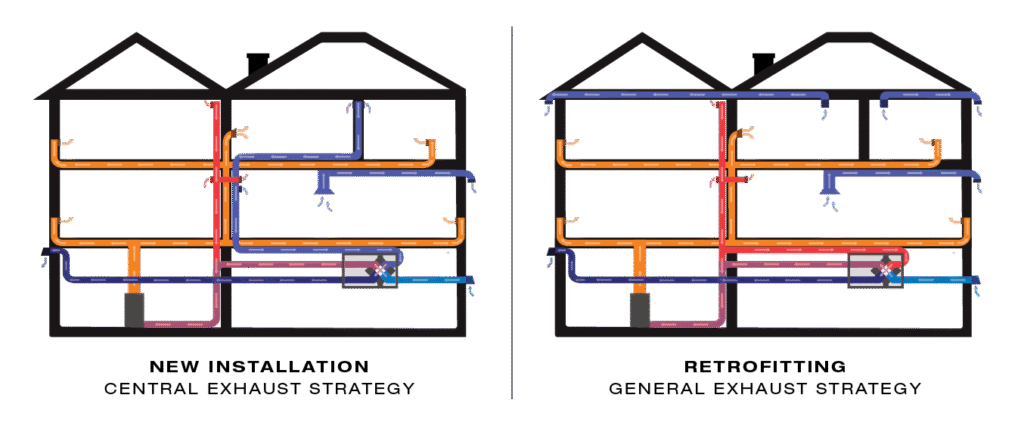 For new construction projects, the preferred installation method is a central exhaust strategy. Central exhaust provides an ample supply of filtered outdoor air and replaces bathroom exhaust fans, capturing energy from bathrooms and kitchens that would otherwise be wasted.
For retrofitting projects, the preferred installation method is a general exhaust strategy, which utilizes existing ductwork and exhaust fans. This allows fresh air to be supplied to the furnace/AC via return air duct connections, commonly referred to as partial bypass.
Why Choose RenewAire ERVs Over Other Ventilation Options?
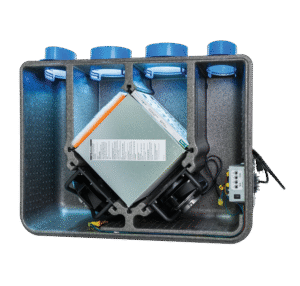
For over 40 years, RenewAire ERVs have been recognized for their ease of use, reliability, and energy savings.
- High ROI: With a short payback and high rate of return, RenewAire ERVs generate significant savings. A minimal initial capital investment will result in decades of energy savings.
- Reliable Operation: Our built-to-last ERVs have lifespans of 25+ years and operate consistently year-round in every climate, including hot, humid, and sub-zero environments.
- Easy Installation: RenewAire ERVs can be mounted in multiple orientations and do not require drain pans, which makes them a breeze to install. Our units also provide a single exhaust point, which means less equipment required to purchase and install.
- Easy Maintenance: Our ERVs are easy to maintain—simply check the filters every three months and replace as needed. And once each year, vacuum the ERV core face to remove any particles—no washing required.