
Bosarge Family Education Center
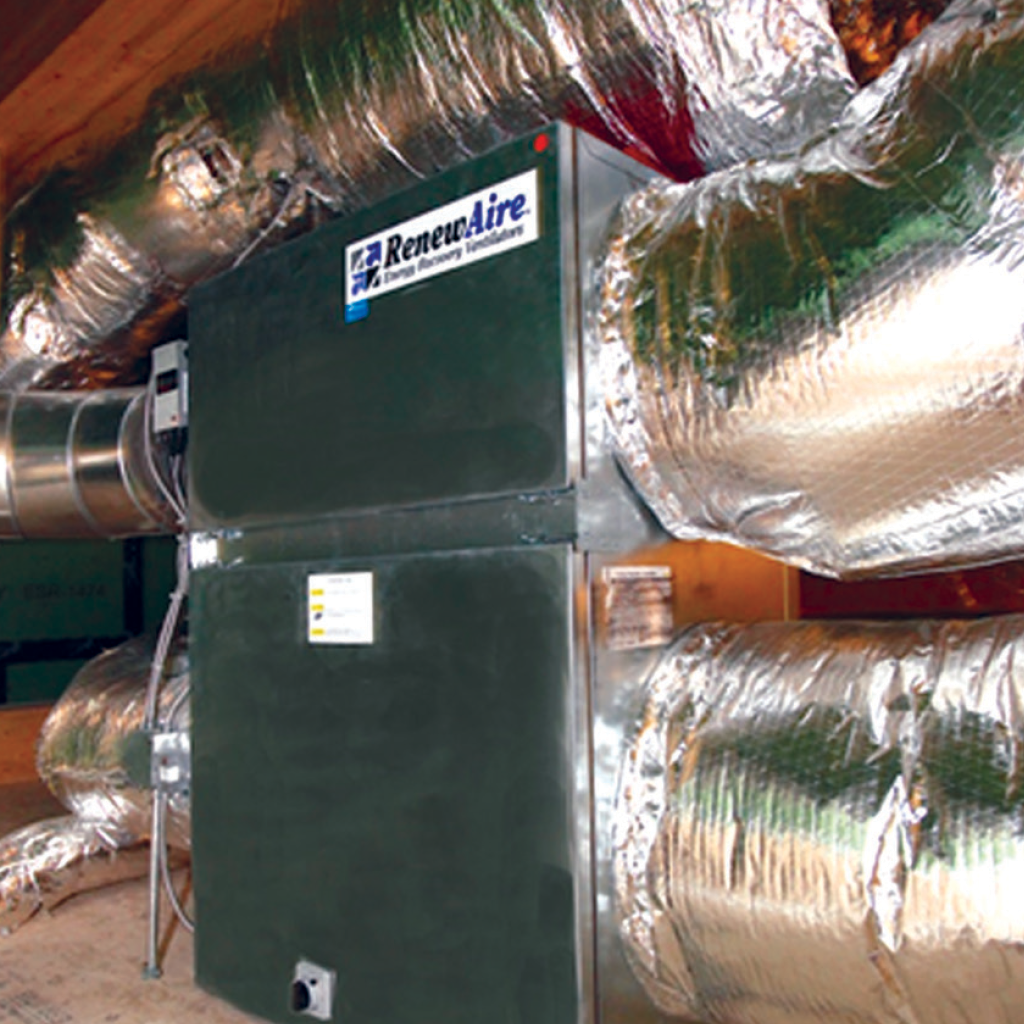
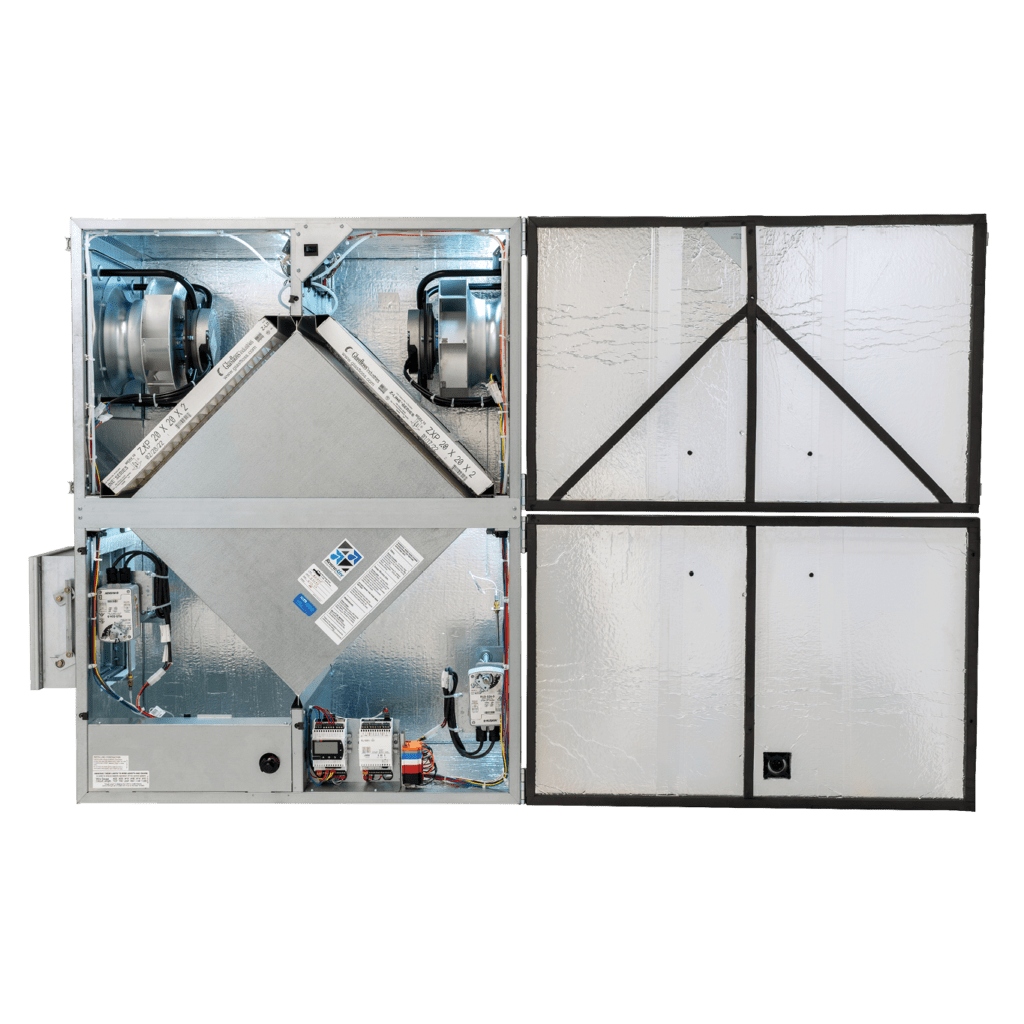
To attain net-zero status and save energy, the Bosarge Family Education Center at the Coastal Maine Botanical Gardens installed RenewAire energy recovery ventilators (ERVs).
Originally published December 14, 2014 | Last updated: April 15, 2026
At a Glance
Project:
Education Building
RenewAire ERVs Installed:
- (1) HE1X unit
- (3) EV450 units
RenewAire Sales Rep:
Engineering Firm:
Contractor:
Overview
The Bosarge Family Education Center at the Coastal Maine Botanical Gardens is an 8,200-square-foot landmark of sustainable industry. Featured in the Spring 2014 edition of High Performing Buildings magazine, the facility serves as an active teaching tool for sustainability. Since its July 2011 occupancy, the Center has maintained LEED® Platinum Certification and net-zero energy performance.
The Net Zero Challenge
Success required the building to achieve a net-zero energy balance. To reach this goal, the team applied fundamental industry best practices for sustainable design, as championed by the U.S. Green Building Council (USGBC) and the Whole Building Design Guide (WBDG):
- Reduction-First Methodology: Minimizing demand-side loads through high-performance envelopes and efficient mechanical equipment before implementing renewable energy.
- Energy Balance Modeling: Offsetting every unit of energy consumed on-site with a unit of locally generated renewable energy.
- Carbon Footprint Mitigation: Emphasizing high-efficiency systems that reduce or eliminate on-site fossil fuel combustion.
In Maine’s demanding climate, designing a high-traffic public building to these standards is a significant engineering challenge. The facility required an HVAC strategy that could provide increased ventilation for up to 200 daily visitors without exhausting the energy budget needed to maintain its net-zero status.
The RenewAire Solution
To meet these rigorous requirements, the project team of Allied Engineering Inc. (now part of Salas Engineering) and HP Cummings reached out to RST Thermal. As a well-respected manufacturers’ representative firm specializing in high-efficiency heating, cooling, and ventilation systems, RST Thermal identified RenewAire energy recovery ventilators (ERVs) as the critical mechanical link for the facility’s ventilation strategy.
By utilizing energy recovery, the units provided the necessary increased ventilation for high occupant density while exceeding energy efficiency standards. This ensured the HVAC system remained within the building’s tight energy “envelope,” allowing the overall design to focus on achieving its ambitious net-zero goals.
Operational data from a full year (Nov 2012–Oct 2013) highlights the effectiveness of this solution:
- Total Electricity Consumed: Approximately 45,700 kWh.
- Ventilation Efficiency: RenewAire ERV units accounted for only 4% of the total energy use.
- Net-Zero Surplus: The solar electric system produced 55,900 kWh, creating a significant energy surplus.
This efficiency enabled the facility to surpass the net zero threshold and operate as a net exporter of clean energy back to the local utility grid.
Evolving Standards: Looking Ahead
While the Bosarge project remains a landmark in the “net zero” community, standards for sustainable building continue to advance. Today, the USGBC is expanding its focus toward Net Zero Carbon to account for a building’s full lifecycle emissions. In contrast, the Department of Energy (DOE) is shifting toward a more relaxed definition of net zero building to encourage private-sector innovation. Regardless of these shifting benchmarks, the core requirement of net-zero building remains the same: highly efficient, adaptable technologies and expert technical partnerships are essential for reaching the next generation of sustainability standards.
Frequently Asked Questions (FAQs)
What is Net Zero?
A Net Zero building is a structure that balances its energy “checkbook” every year. It produces as much energy as it uses. To reach this goal, builders first reduce the building’s “appetite” for power using high-efficiency technology like RenewAire energy recovery ventilators (ERVs). Once the energy demand is minimized, on-site renewables like solar panels can easily provide the remaining power needed to run the facility.
How does energy recovery technology support net-zero energy goals?
An energy recovery ventilator (ERV) reduces a building’s total energy demand by utilizing a static-plate core or rotating wheel to exchange energy between outgoing and incoming airstreams. Using balanced airflows, the ERV recovers otherwise-expended total energy—both heat (sensible) and humidity (latent).
Summer Operation: Warm, humid outdoor air is pre-cooled and dehumidified by the outgoing conditioned air.
Winter Operation: Cold, dry outdoor air is preheated and humidified by the outgoing warm interior air.
By pre-conditioning the air, the ERV significantly lowers the heating and cooling loads on the primary HVAC system. This reduction in “energy appetite” allows for smaller mechanical systems and enables on-site renewable energy to meet the facility’s remaining power requirements, which is critical for achieving net-zero performance.
How does an ERV help achieve Net Zero energy performance?
Energy recovery ventilators (ERVs) capture thermal energy from exhausted indoor air to pre-condition incoming fresh outdoor air. By reducing the heating and cooling load by up to 112,000 BTUs in extreme conditions, the system minimizes total power demand, allowing renewable sources like solar to cover the remaining energy needs.
To learn more about how ERVs work, visit: Renewaire.com/how-ervs-work/.
What percentage of a building's energy is used by an ERV system?
In high-efficiency designs like the Bosarge Family Education Center, RenewAire ERVs account for only 4% of the total 45,700 kWh of electricity consumed annually. This ultra-low power consumption is critical for maintaining superior indoor air quality (IAQ) without compromising energy goals.
Can an ERV system be used with geothermal heat pumps?
Yes. RenewAire ERVs work in tandem with geothermal systems to provide generous ventilation. While the geothermal system handles the primary heating and cooling, the ERV ensures fresh air exchange with maximum thermal recovery, significantly reducing the stress on the geothermal loop.
Can increased ventilation coexist with net-zero goals?
Yes. By using high-efficiency ERVs, facilities can provide increased ventilation to meet ASHRAE standards while maintaining the low energy use intensity (EUI) necessary for net-zero certification.
What is a LEED certification?
LEED (Leadership in Energy and Environmental Design) certification is the world’s most widely used, USGBC recognized green building rating system. It provides a framework for healthy, efficient, and cost-effective sustainable buildings, USGBC reducing carbon emissions and operational costs. Certification levels include Certified, Silver, Gold, and Platinum.
RenewAire ERVs Used in Sustainable Projects (Net Zero, Passive House, etc.)
Recent Case Studies

[loop_index]
Municipal: Prairie du Sac Town Hall
[loop_index]
Public Safety: Wasilla Police Station