
PassIVE HOUSE PROJECT: Ulster House
How a Toronto multiplex utilized low-profile RenewAire SL Series ERVs to slash peak HVAC energy costs and pack high-performance ventilation into tight urban footprints
Published: October 31, 2025 | Updated: June 24, 2026
At a Glance
Project:
Ulster House Multiplex
Location:
Toronto, ON
Facility Size:
4,661 sq. ft.
RenewAire ERVs Installed:
SL70 ERVs
BR130 ERV
RenewAire Sales Representative:
Key Outcomes:
Met Elite Sustainability Benchmarks
Mitigated Moisture and Stale Air Concerns
Managed Extreme Temperatures
Overcame Spatial Constraints
Challenges
Meet Elite Sustainability Benchmarks: The team faced a major engineering hurdle. They needed to meet strict Passive House building standards. They also aimed to satisfy Architecture 2030 Challenge benchmarks.
Mitigate Moisture and Stale Air Risks: Meeting high sustainability goals required a tightly sealed building envelope. Without a proper ventilation strategy, the multiplex faced severe indoor air quality (IAQ) risks. Trapped moisture could easily cause stale air and mold growth.
Manage Extreme Cold-Climate Air Tempering: Toronto’s freezing winter climate presented a difficult obstacle. Bringing in raw, freezing outdoor air heavily strains heating systems. Engineers had to temper sub-zero fresh air without creating massive energy drag.
Overcome Intense Spatial Constraints: Squeezing five living units onto a tight urban corner lot left zero room for bulky mechanical equipment. The project demanded ultra-compact ventilation hardware. The units had to fit low-clearance spaces without stealing valuable square footage.
Overview
Engineering a High-Performance Infill Multiplex
Completed in 2025 by LGA Architectural Partners, Ulster House is a progressive urban multiplex project. Located in Toronto, this development replaced a crumbling single-family home with a modern, three-story building and a separate laneway suite. The project provided five high-performance homes designed to achieve gentle urban density.
What began as a niche design choice has evolved into a North American architectural boom, with high-performance passive buildings surging in popularity. To bring this massive trend to life on a tight Toronto corner lot, the design team engineered Ulster House like a high-tech thermos. Specifically, they met these targets by systematically executing the core steps of a passive building project:
Captured Solar Energy First: The team carefully positioned high-performance triple-pane windows to trap winter sun while blocking intense summer heat.
Broke Up Thermal Bridges: Builders insulated every structural joint to stop heat from leaking through the building’s physical frame.
Sealed the Envelope: An airtight membrane completely wrapped the entire multiplex, stopping random drafts and eliminating energy loss.
Installed the “Lungs” of the House: Because the sealed building could no longer breathe, continuous mechanical ventilation was required. The LGA team partnered with RenewAire sales representative Mits AirConditioning Inc. to engineer the ideal ventilation strategy. They specified RenewAire energy recovery ventilators (ERVs) to exchange stale air safely without wasting energy.
Solutions
Decoupling Airflow with Decentralized Systems
To protect indoor air quality without hurting thermal performance, the team moved past a one-size-fits-all approach. Instead, the team chose a decentralized ventilation design. This layout allowed each individual living unit to handle its own fresh air needs cleanly and efficiently.
The SL Series: Engineered for Passive House Projects
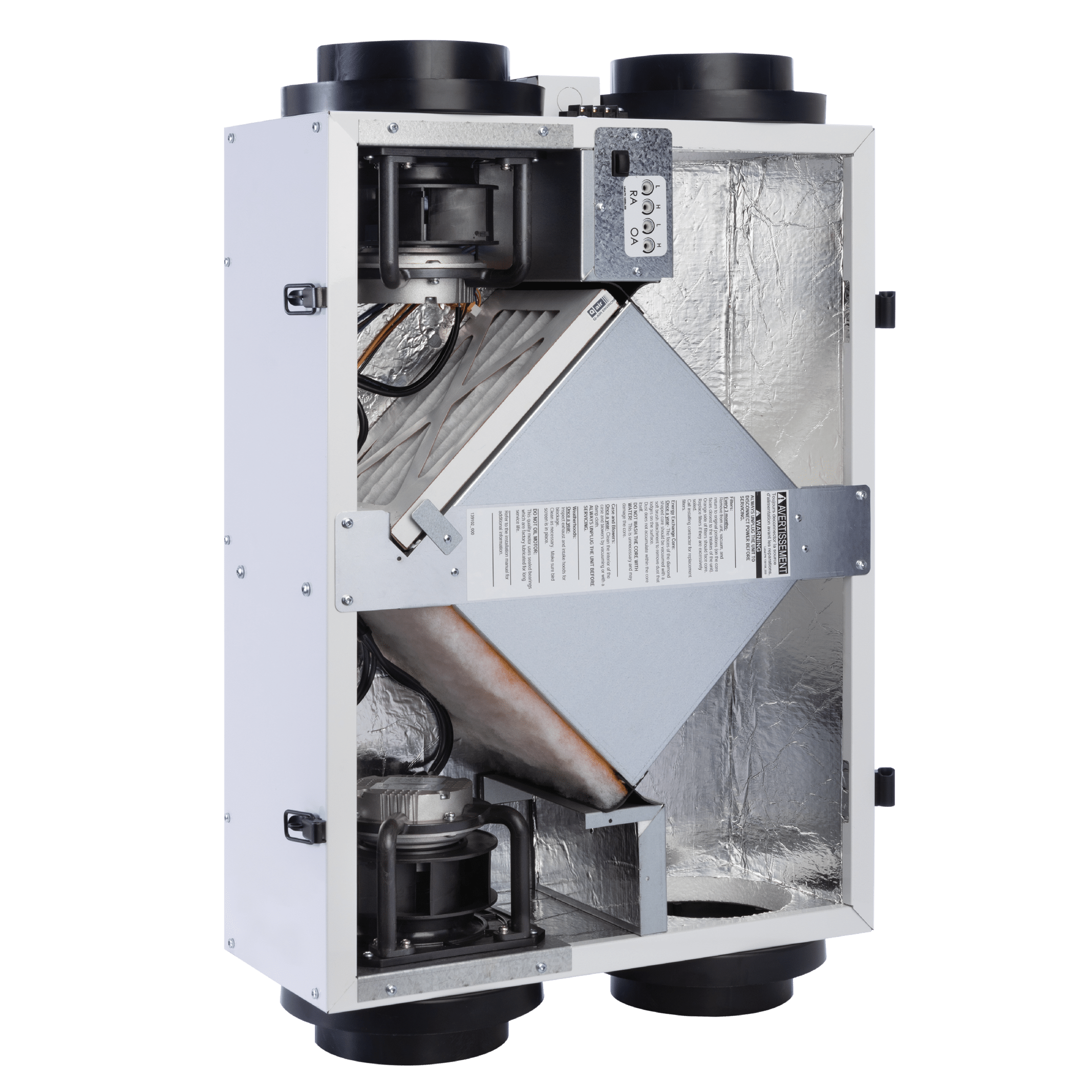
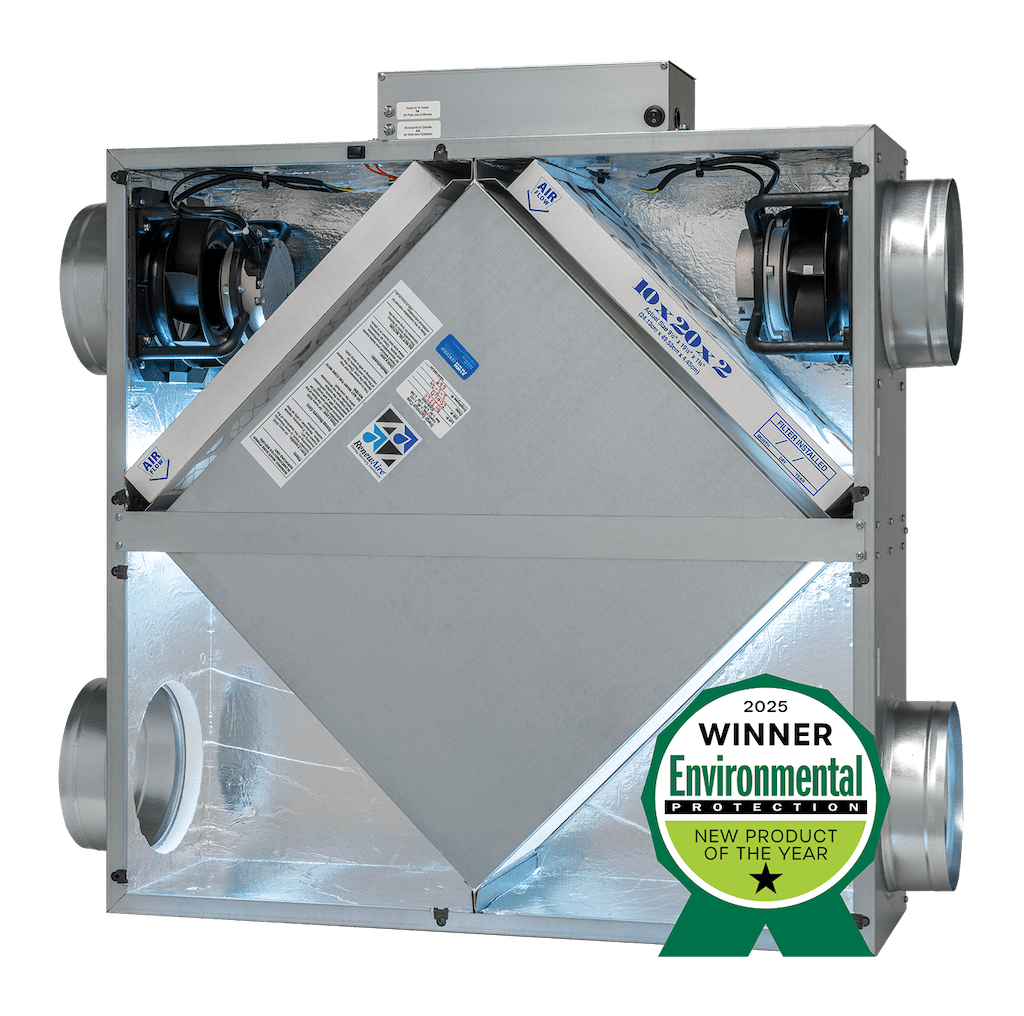
For the main multi-family condominium spaces, the team specified compact RenewAire SL Series energy recovery ventilators. To do this, engineers developed these ERVs from the ground up to meet rigorous passive building performance metrics. The units operated smoothly across a versatile airflow range of 30–130 CFM.
Low-Profile Cabinet Design: The defining physical characteristic of the SL Series is its exceptionally slender cabinet. As a result, this compact engineering allowed installers to mount the units seamlessly inside shallow drop-ceilings. This setup successfully preserved maximum liveable square footage.
Electronically Commutated (EC) Motors: The SL Series featured advanced EC motorized impellers. These smart motors modulated fan speed dynamically based on actual occupant demand. This optimization drastically minimized electrical energy input during strict energy modeling protocols.
The BR130: Dedicated Ventilation for the Laneway Suite
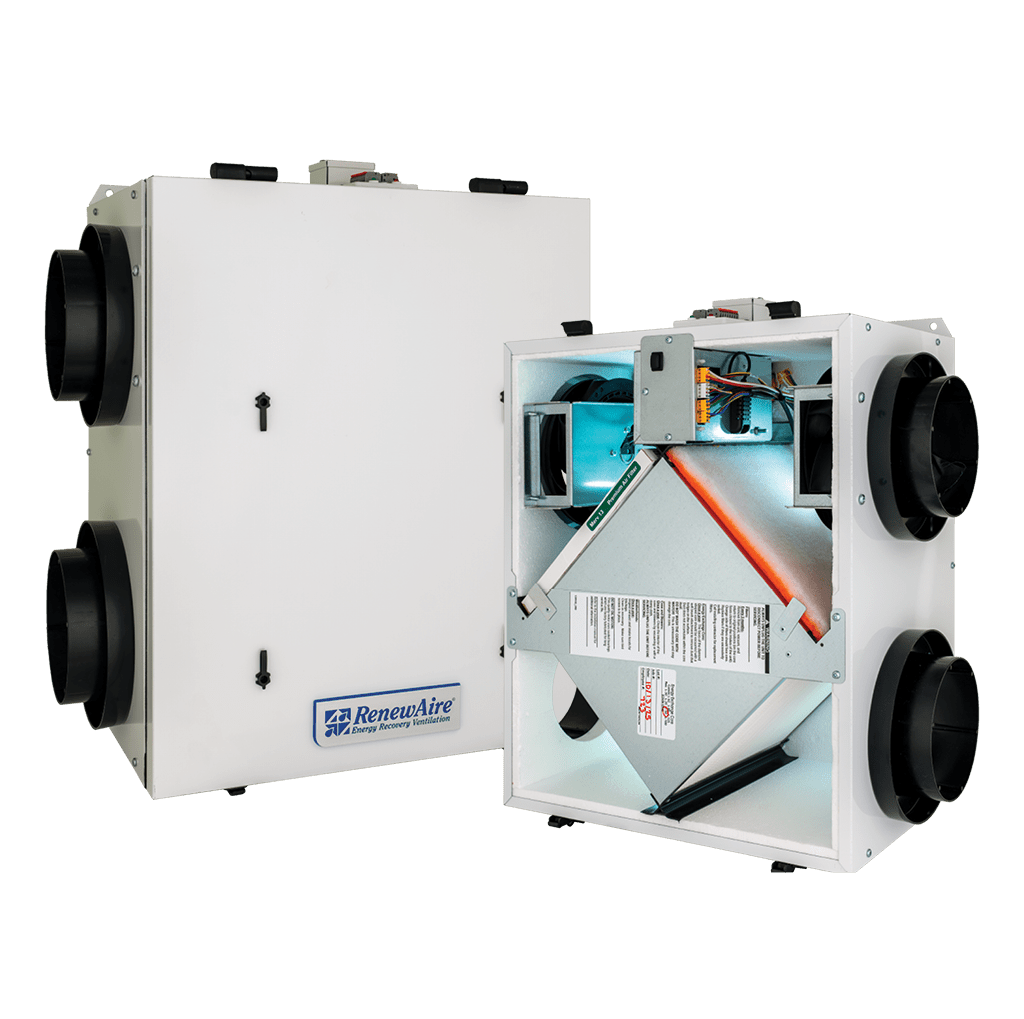
While the multiplex units relied on the SL Series, the independent laneway home demanded a standalone system. The RenewAire BR130 fulfilled this role perfectly as the single-family residential counterpart.
While the multiplex units relied on the SL Series, the independent laneway home demanded a standalone system. The RenewAire BR130 fulfilled this role perfectly as the single-family residential counterpart.
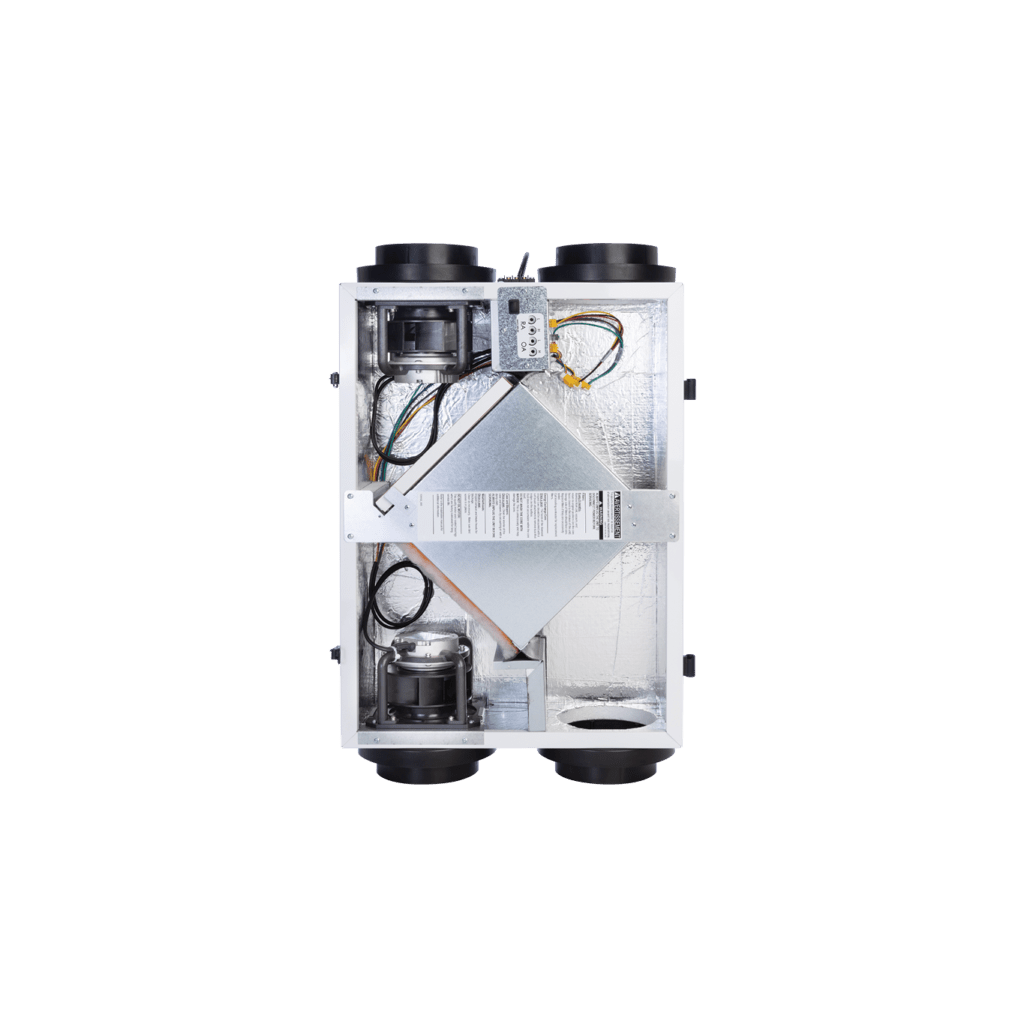
Both the BR and SL ERVs use a static-plate, enthalpy core to separate the supply and exhaust airstreams. This design ensures that stale room air is completely exhausted and does not contaminate the incoming outdoor air. Meanwhile, fresh, filtered outdoor air is continuously brought inside to optimize IAQ. As air passes through the core, sensible heat and latent humidity transfer naturally across the membrane, pre-conditioning the incoming fresh air cleanly.
Overcoming the Passive House Ventilation Challenge
Building to strict passive standards requires tight air sealing techniques. Although preventing energy loss is a major tenet of passive structures, it can introduce air quality issues. Without the proper amount of fresh outdoor air coming in and stale indoor air going out, internally generated contaminants build up and can impact occupant health, wellness, and productivity. As a result, energy recovery ventilators have emerged as the de facto prerequisite for passive building success across North America.
In the case of Ulster House, the engineering team chose RenewAire’s advanced technology to conquer these passive hurdles in two distinct ways:
Meeting Strict Space-Conditioning Targets: By recycling thermal energy that would otherwise be exhausted, the units heavily insulated the building’s ventilation load. As a result, this optimization made it much easier for the multiplex to stay securely under strict passive annual heating and cooling demand thresholds.
Minimizing Primary Energy Demand: In keeping the fan power draw exceptionally low, the SL and BR Series ERVs prevented the building’s cumulative electrical performance from exceeding strict passive modeling baselines.
Meeting the Architecture 2030 Challenge
By executing these precise steps, the project positioned itself to simultaneously tackle the Architecture 2030 Challenge. This global initiative demands that new projects achieve carbon-neutral operations by the year 2030. Consequently, to meet the baseline today, new buildings must slash fossil-fuel use by at least 90%.
Ulster House qualified cleanly for this elite threshold through targeted HVAC innovation and other sustainable design choices:
Carbon-Reducing Thermal Recovery: The team relied on RenewAire’s low-profile SL Series and two-duct BR Series ERVs to drastically shrink the building’s overall heating and cooling energy loads.
Fossil-Fuel-Free Layout: In addition, the building relied entirely on an all-electric heating, cooling, and hot water setup.
Solar-Powered Renewables: A rooftop solar panel array generated clean energy on-site to offset daily power needs.
Results
Proving the Value of Energy-Efficient Ventilation
The decentralized ventilation strategy delivered exceptional real-world performance across all targeted metrics. In fact, the final build successfully proved that high-density urban multiplexes can be both incredibly sustainable and highly liveable.
Drastically Reduced HVAC Energy Costs: RenewAire’s static-plate enthalpy cores performed flawlessly in Toronto’s cold climate. This reliable thermal performance minimized the heating load significantly. As a result, the system cut peak utility bills to a minimum, keeping energy reduction as the primary financial driver.
Optimized Indoor Air Quality: Continuous, balanced ventilation completely eliminated the threat of stale air. At the same time, trapped moisture and airborne pollutants were removed safely without creating structural drafts. This balanced exchange guaranteed pristine IAQ for all five families.
Measurable Project Outcomes
Achieved Carbon-Neutral Benchmarks: Like reducing HVAC energy costs, the energy efficiency of the SL and BR series ERVs proved vital in satisfying the Architecture 2030 Challenge metrics. They protected the building from extreme seasonal loads.
Preserved Premium Square Footage: The low-profile cabinet designs successfully solved the project’s intense spatial puzzle. Tucking the hardware cleanly into shallow ceiling drop-boxes eliminated the need for bulky mechanical rooms. Consequently, this design choice saved valuable living space for the residents.
Explore High-Performance ERVs for Sustainable Multi-Family Projects
Frequently Asked Questions (FAQs)
Why are energy recovery ventilators (ERVs) required for Passive Building projects?
Believe it or not, energy recovery ventilators (ERVs) are not explicitly mandated by name in every standard. However, the stringent performance benchmarks imposed by passive building requirements make them a mathematical necessity. An airtight building envelope blocks natural air exchange. Mechanical ventilation is required to continuously bring in fresh outdoor air. Pulling in raw, untreated outdoor air would instantly overwhelm the building’s heating and cooling limits. ERVs solve this by transferring thermal energy between airstreams. This process allows the project to satisfy strict space-heating allowances safely. To verify these structural rules, you can review the five core design pillars on the Passive House Institute Certification Hub. You can also check the mandatory performance load testing guidelines on the Phius Standards Portal.
What is the difference between Passive House (PHI) and PHIUS?
Although Passive House Institute (PHI) and Passive House Institute US (PHIUS) are often used interchangeably, these are two distinct organizations. As the international arm of passive building standards, PHI began in Germany in 1990. Meanwhile, PHIUS’s history reaches back to a US-based project in 2002.
The international PHI applies a single, fixed performance standard for projects worldwide. Conversely, PHIUS developed climate-specific standards tailored specifically to North American weather patterns and regional building practices. The organization manages US-based projects directly. It also supports local northern developments through the PHIUS Canada Chapter. Both paths require highly efficient mechanical ventilation.
What are the requirements for a Passive House building?
A Passive House building must meet rigorous performance metrics managed by the Passive House Institute (PHI) or PHIUS. Certified projects must satisfy strict limits on space heating demand, total primary energy use, and airtightness. They also require continuous mechanical ventilation with high-efficiency thermal recovery to maintain pristine indoor air quality.
To learn more about specific PHIUS standards and certifications, please visit: https://www.phius.org/standards.
What is the Architecture 2030 Challenge?
The Architecture 2030 Challenge is a global initiative calling for all new buildings and major renovations to achieve net-zero, carbon-neutral operations by the year 2030. To hit the current baseline, new designs must achieve a minimum 90% reduction in fossil-fuel energy consumption. High-efficiency energy recovery ventilators (ERVs) help meet this elite threshold by recycling thermal energy from exhaust air, drastically lowering a building’s overall heating and cooling loads.
To learn more about this green-building goal, visit: architecture2030.org/2030_challenges/2030-challenge/.
How do decentralized ERVs reduce HVAC energy costs in multi-family projects?
Decentralized systems ventilate each living unit independently. This strategy prevents the massive thermal losses of large, centralized duct networks. Pre-conditioning the fresh air stream minimizes heating loads and slashes peak utility bills first. Lowering this operational load also extends the lifespan of the primary heating and cooling equipment.
To explore the financial advantages and tax credits of these systems, read our guide on multi-family ERV cost benefits.
Can compact energy recovery ventilators fit in tight multi-family spatial constraints?
Yes. Low-profile units like the SL Series are engineered specifically for shallow ceiling drop-boxes. This compact design eliminates the need for bulky centralized mechanical rooms. It successfully preserves premium residential living square footage.
How do energy recovery ventilators protect indoor air quality (IAQ) in cold climates?
In freezing winter conditions, raw outdoor air heavily strains heating infrastructure. These systems pass exhaust and supply streams through a static-plate enthalpy core. The core tempers sub-zero fresh air safely while continuous balanced ventilation eliminates stale air and moisture risks.
Recent Case Studies

[loop_index]
Municipal: Prairie du Sac Town Hall
[loop_index]
Public Safety: Wasilla Police Station