
Prairie du sac TownHall
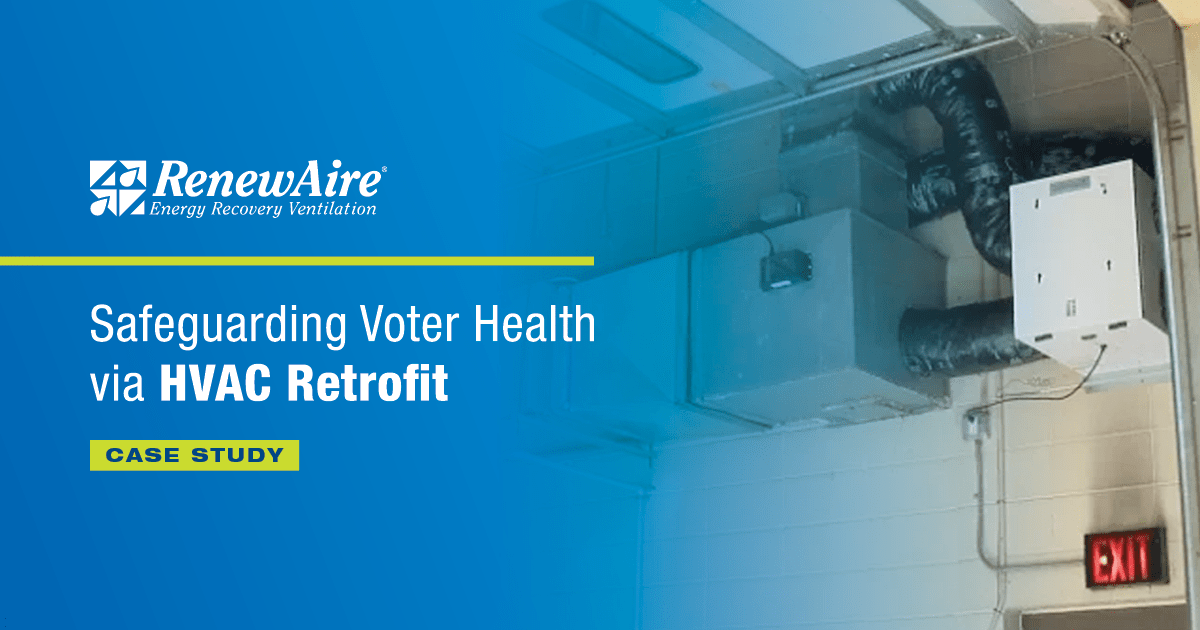
How a Wisconsin town hall retrofitted its polling venue with a RenewAire EV Premium L ERV to continuously flush out stale air and safeguard voter health.
Published: October 30, 2020 | Updated: June 17, 2026
At a Glance
Project:
Location:
Prairie du Sac, WI
Facility Size:
1,500 sq. ft.
RenewAire ERVs Installed:
Mechanical Contractor:
Key Outcomes:
Continuous Pathogen Dilution.
Protected Energy Budgets
Zero Cross-Contamination
Challenges
High-Risk Pandemic Environment: Executing essential public elections at the height of the COVID-19 pandemic, where airborne viral transfer was an active, high-stakes public health threat to voters and poll workers.
Drastic Occupancy Spikes: Extreme, high-density crowds during seasonal voting windows that instantly altered the indoor environment and overwhelmed standard mechanical systems.
Recirculation Hazard and Pathogen Accumulation: Traditional HVAC configurations rely heavily on internal air recirculation to conserve energy, actively trapping and distributing airborne pathogens, viruses, and bacteria within the breathing zone rather than exhausting them.
Elevated Carbon Dioxide (C02): Intense human respiration in a confined, 1,500-square-foot space causing rapid C02 accumulation, resulting in visitor discomfort and staff cognitive fatigue.
Strict Energy Budget Constraints: A small municipal budget that could not support the massive utility spikes or system strain required to condition 100% raw outdoor air through a traditional HVAC upgrade.
Overview
A Hidden Risk in Local Elections
When residents head to their local polling place, they expect short lines, functional machines, and a smooth democratic process. Air quality is rarely top of mind. However, at the height of the COVID-19 pandemic, local leadership in Prairie du Sac, Wisconsin, recognized that packing hundreds of citizens into a 1,500-square-foot communal space presented a major public health liability. With airborne viral transfer posing a real and dangerous risk, securing the indoor environment became a top civic priority.
Why IAQ Matters Everywhere
Indoor air quality (IAQ) is critical in any environment—regardless of whether it’s a home, a hospital, or a municipal building. However, during a global health crisis, high-density civic spaces experience a unique type of strain. Unlike residential settings with predictable, low-density occupancy, a town hall acting as a polling venue faces sudden “occupancy shock.” Hundreds of voters cycle through a confined space in a single day, drastically increasing the airborne viral load and making continuous, high-volume fresh air exchange an immediate necessity to prevent cross-contamination.
The Turning Point at Prairie du Sac
Recognizing these acute vulnerabilities, local town officials realized that basic surface sanitization and standard mechanical recycling of indoor air were no longer enough to protect the community. To ensure safe, continuous operation of democratic processes, they needed to target the root source of airborne risk.
Solution
The 3 Keys to Countering Airborne Pathogens
To solve this crisis, the town rejected superficial, single-measure fixes. Instead, they partnered with local mechanical contractor Dischler Heating, Cooling & Fireplaces to implement a comprehensive, system-level defense.
The engineering strategy was anchored directly to RenewAire’s 3 Keys to Countering COVID-19 white paper. This multi-layered framework was built entirely on pandemic guidance from by cognizant authorities like the Centers for Disease Control and Prevention (CDC) and the American Society of Heating, Refrigerating and Air-Conditioning Engineers (ASHRAE).
Instead of relying on a standalone technology, the team deployed a coordinated, three-pronged mitigation strategy. This approach combines high-volume balanced ventilation, medical-grade filtration, and targeted air disinfection. Today, this exact multi-layered methodology serves as the real-world foundation for ASHRAE Standard 241 (Control of Infectious Aerosols).
Overcoming the Energy Penalty of Standard 241 Requirements
Increasing outdoor air ventilation is the most effective way to dilute active viral loads. It is also a core requirement to satisfy infectious aerosol standards. However, forcing massive volumes of fresh air into a building creates an unintended consequence: a severe “energy penalty.”
Standard commercial HVAC split systems are designed to recirculate indoor air. They lack the capacity to condition 100% raw, humid, or freezing outdoor air. Doing so strains mechanical compressors and blows past municipal utility budgets.
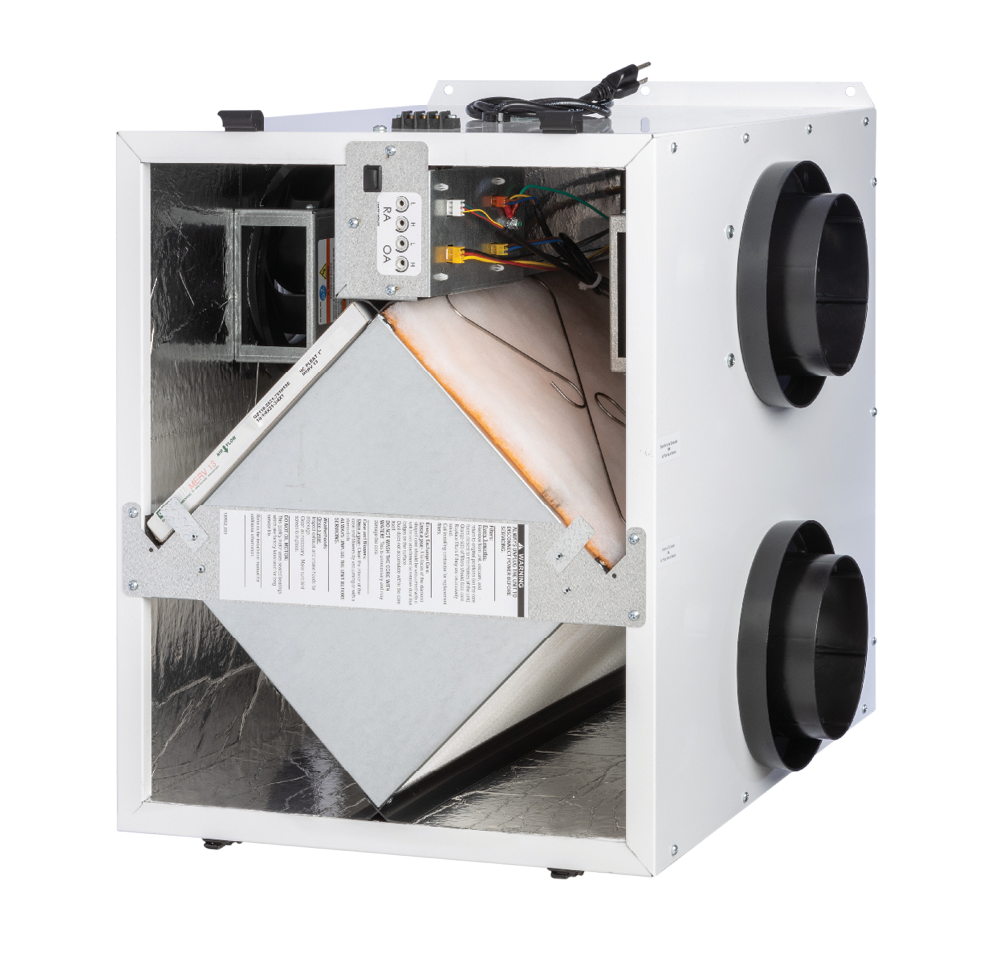
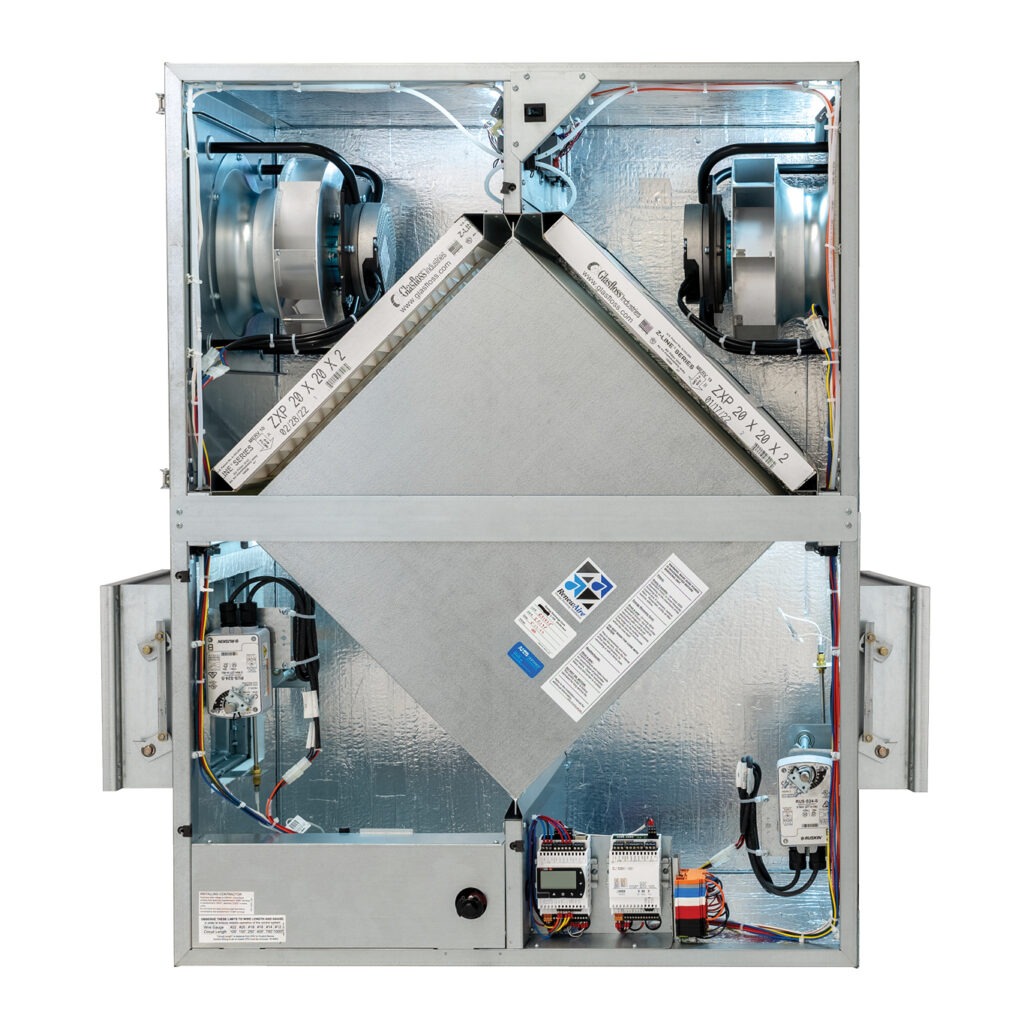
To achieve the rigorous clean-air delivery rates mandated for high-risk occupancy events, the team had to eliminate this financial and physical barrier. They anchored the system with a RenewAire EV Premium L energy recovery ventilator (ERV).
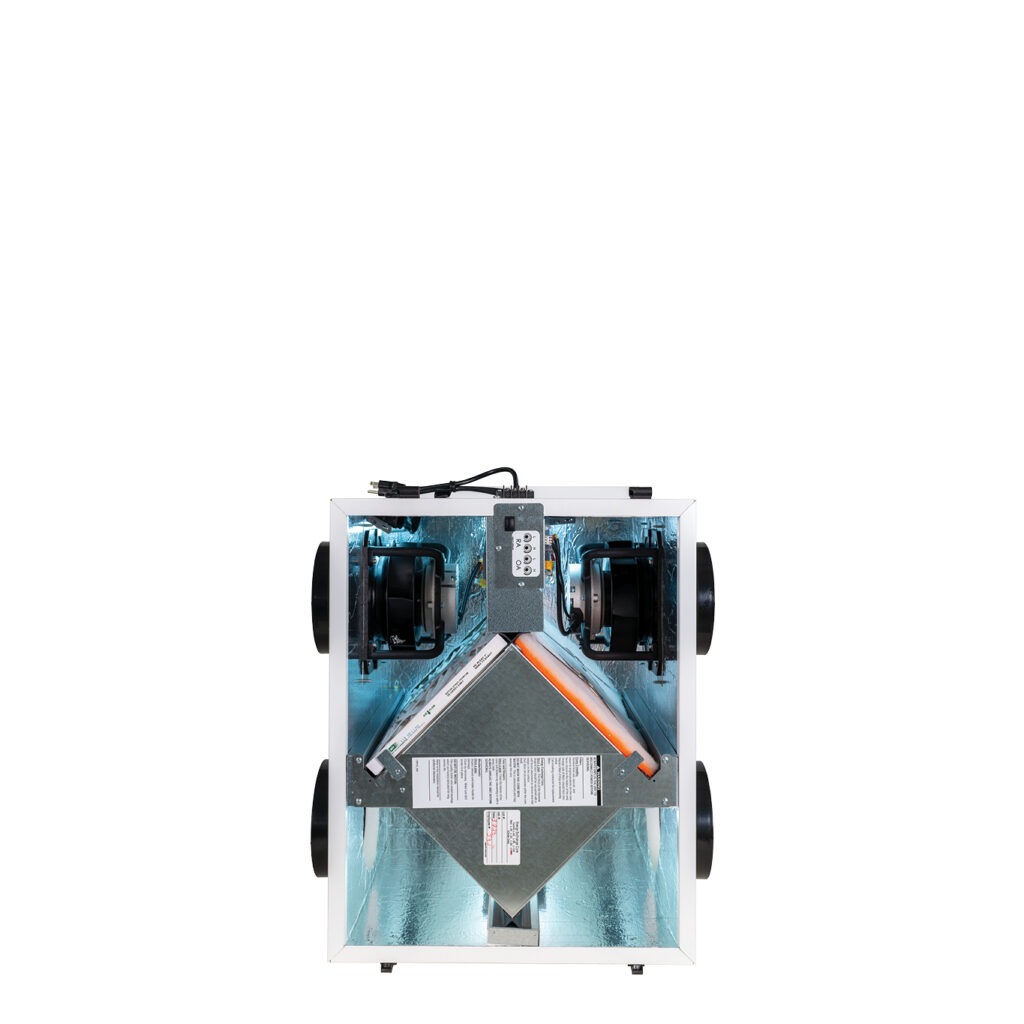
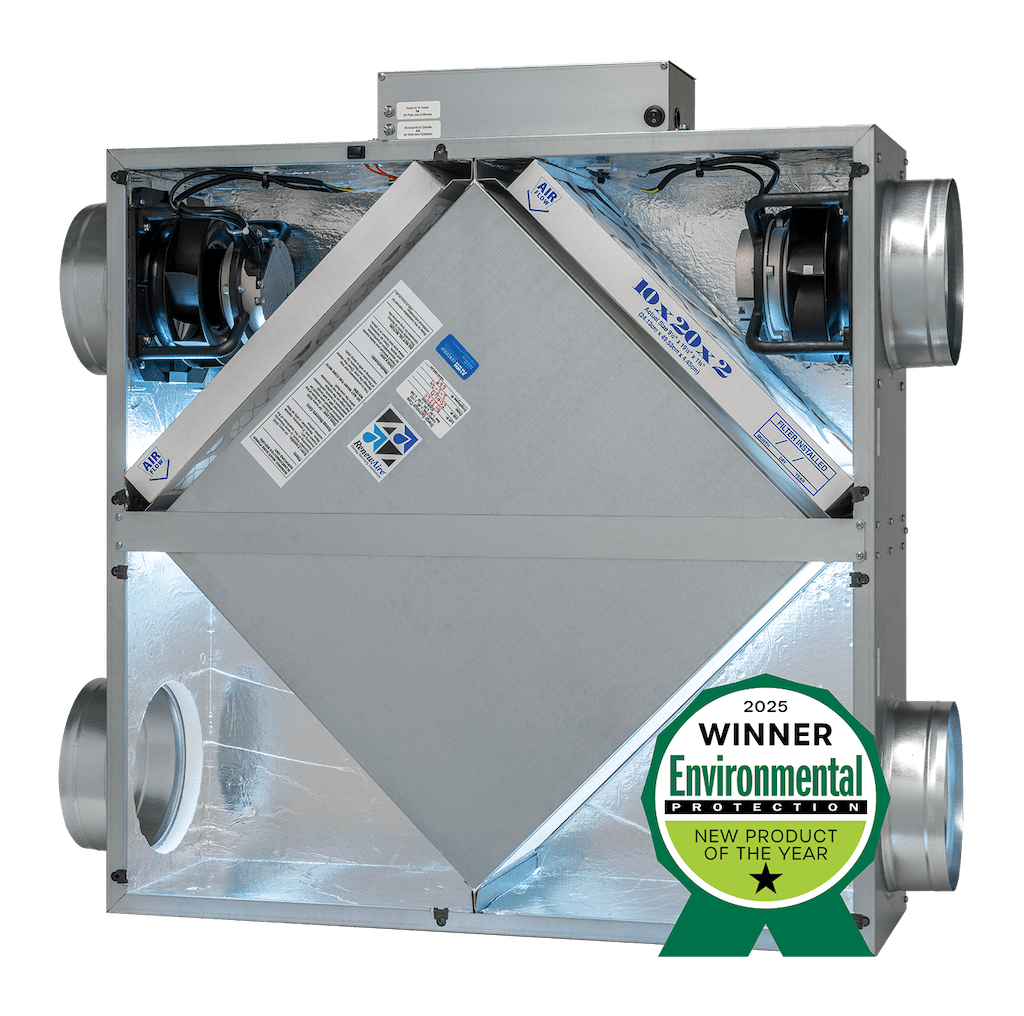
The unit’s static-plate, cross-flow core captures total energy—both sensible heat and latent moisture—from the stale, dirty outgoing airstream. It then uses that captured energy to “pre-condition” the incoming 100% fresh, healthy, outdoor air. Because the air is pre-conditioned before it ever reaches the town hall’s central split system, the facility satisfies strict pathogen-dilution goals. And, this also helps to keep energy costs stable and prevents system burnout.
Executing the Layered Defense
With the energy barrier solved by the ERV, the team completed the three-layer pathogen shield required to meet evolving public health standards:
Layer 1: Balanced Ventilation (Dilution): The RenewAire EV Premium L continuously pulls stale, virus-laden air out of the breathing zone and replaces it with 100% clean outdoor air, dropping indoor C02 levels and ensuring contaminants cannot accumulate.
Layer 2: High-Efficiency Filtration (Capture): The system integrated MERV 13 filtration, which actively captures the microscopic respiratory droplets and fine aerosols that serve as primary transport vehicles for airborne viruses.
Layer 3: Air Disinfection (Inactivation): To guarantee ultimate air security, Ultraviolet Germicidal Irradiation (UVGI) was layered into the airstream. By treating the air with targeted UV light, the system actively neutralizes the cellular and viral structure of any remaining pathogens. Crucially, because the UVGI operates inside a balanced, high-airflow ERV system rather than as a standalone room unit, it avoids the common material decay or zone stagnation issues associated with isolated UV deployments.
By retrofitting this advanced, Standard-241-aligned array directly into the town hall’s existing ductwork, the municipality avoided costly structural renovations while permanently establishing a superior grade indoor quality.
Results
A Safe and Sustainable Civic Foundation
By prioritizing comprehensive indoor air quality, the Town of Prairie du Sac successfully transformed its town hall into a resilient, bio-secure voting venue. The installation of the RenewAire ERV achieved key strategic outcomes for the municipality:
Continuous Pathogen Control: By delivering 100% fresh, filtered outdoor air and integrating inline UVGI, the system continuously dilutes and inactivates airborne infectious aerosols, drastically reducing transmission risks during high-density voting events.
Optimized Indoor Comfort: The continuous air exchange prevents the heavy accumulation of C02 and other contaminants. This elminated the “stuffy” environment typical of crowded rooms, and it kept poll workers and voters comfortable and alert.
Energy-Efficient Stewardship: Thanks to the energy-transfer capabilities of the static-plate core, the town hall can maintain total climate control without straining their budget or overloading the existing HVAC equipment.
Ultimately, this project serves as a definitive, permanent roadmap for municipal, civic, and light commercial spaces seeking to protect public health without sacrificing energy efficiency.
Frequently Asked Questions (FAQs)
What is ASHRAE Standard 241?
Released in 2023, ASHRAE Standard 241 (Control of Infectious Aerosols) is the industry’s first enforceable mechanical standard designed to pandemic-proof indoor environments. It regulates how buildings must manage air quality to reduce the risk of disease transmission from airborne pathogens like COVID-19, influenza, and wildfires.
The standard defines specific requirements for “Infection Risk Management Mode” (IRMM). When a public health threat or seasonal spike occurs, building operators must activate advanced, layered defense strategies. These strategies combine increased ventilation, high-efficiency filtration, and air disinfection to deliver a target volume of clean, pathogen-free air to occupants without permanently driving up energy costs.
To learn more, visit the ASHRAE website.
How do RenewAire ERVs help facilities meet ASHRAE Standard 241?
ASHRAE Standard 241 establishes the definitive industry benchmark for controlling infectious aerosols in indoor spaces. It requires specific target rates of equivalent clean airflow during times of high transmission risk.
RenewAire energy recovery ventilators (ERVs) make it cost-effective to meet these strict requirements. By continuously exhausting stale, dirty indoor air and replacing it with 100% fresh, outdoor air, the units maximize pathogen dilution. The static-plate core ensures that incoming and outgoing airstreams remain completely separate, preventing cross-contamination while satisfying the clean-air delivery rates mandated by the standard.
Can an ERV handle high ventilation demands without spiking utility budgets?
Yes. Bringing in the massive volumes of outdoor air required to dilute airborne pathogens normally creates a severe “energy penalty.” Traditional HVAC systems must expend significant energy to heat or cool raw, unconditioned outdoor air, which strains equipment and spikes utility bills.
A RenewAire ERV eliminates this financial pressure by utilizing a static-plate, cross-flow core. The core captures total energy—both sensible heat and latent moisture—from the outgoing exhaust air and uses it to pre-condition the incoming fresh air. This pre-conditioning process allows the facility to achieve superior indoor air quality goals while keeping energy costs stable and preventing system burnout.
Why is a layered defense strategy necessary to mitigate airborne viruses?
Cognizant authorities like the CDC and ASHRAE emphasize that no single technology can completely eliminate airborne risks in high-density environments. Relying on a standalone solution can leave a facility vulnerable to zone stagnation or inadequate clean air distribution.
A layered defense combines ventilation (to dilute contaminants), filtration (to capture microscopic respiratory droplets), and air disinfection (to actively inactivate pathogens). By anchoring this multi-layered framework with a RenewAire ERV and supplementing it with MERV 13 filtration and inline UVGI, facilities establish a comprehensive, system-level defense that permanently secures indoor air quality without sacrificing energy efficiency.
To learn more, read our white paper on the subject.
Recent Case Studies

[loop_index]
Municipal: Prairie du Sac Town Hall
[loop_index]
Public Safety: Wasilla Police Station