
South Pole Ice Core Project
RenewAire ERV operates in -40°F and increases drill-room airflow by 40% – without consuming extra energy.
Published: August 24, 2017
At a Glance
Project:
South Pole Ice Core Project
Location:
South Pole
Industry:
Scientific Research
RenewAire ERVs Installed:
- EV300
Key Outcomes:
- Operated in -40°F
- Ran flawlessly with no defrosting needed
- Achieved an airflow rate of 287 CFM—a 40% increase without consuming extra energy
Overview
With the goal of understanding changes in atmospheric chemistry, climate and biogeochemistry, the U.S. National Science Foundation (NSF) created the South Pole Ice Core Project (SPICE Core). SPICE Core consists of two drilling seasons that last three months each (November to January) from 2014 to 2016. The project will recover an ice core from the South Pole, Antarctica to a depth of 1,500 meters in order to research stable isotopes, aerosols and atmospheric gases spanning approximately 40,000 years.
A central member of the SPICE Core team is Grant Boeckmann, a mechanical engineer with the Ice Drilling Design and Operations Group at the University of Wisconsin’s Space Science and Engineering Center. Boeckmann worked on the design of the drill’s fluid handling and ventilation, and a few weeks before drilling began in 2014, went to the South Pole station to prepare the drill site. He serves as one of the primary drill operators.
Ventilation Challenges
“We needed to find a solution with a high air changeover rate to ventilate the drill room with minimal energy input.” – Grant Boeckmann, Mechanical Engineer and Drill Operator
Drilling the ice core consists of a two-part process: dry drilling down to 200 meters and wet drilling beyond that point. Drilling fluid is then introduced into the borehole to compensate for the removal of the ice core and to maintain pressure equilibrium. Wet drilling prevents the drill hole from caving in and helps to lubricate the drill as it cuts through increasingly harder ice.
Once the wet drilling commenced, a major ventilation challenge arose in the drill room – finding a way to clear out the drilling fluid’s overpowering odor, as well as its heat-induced vapor that was causing serious eye and skin irritations. “We needed to find a solution with a high air changeover rate to ventilate the drill room with minimal energy input,” said Boeckmann.
The need for effective ventilation created another challenge – finding a solution that would withstand the severe cold of the South Pole. This meant being able to operate in temperatures reaching -40°F during the drilling season and enduring up to -117°F during the non-drilling months. On top of that, it was critical that while operating, there would be no need to defrost the system since this would stop the flow of air through the drill room, making operation of the drill very uncomfortable.
RenewAire Solution
Finding the right solution involved determining a way to ventilate the air inside the drill room as fast as possible with one caveat – that only seven kilowatts of energy were available to power the drill room heating and ventilation system. This meant that the ventilator would have to be as energy efficient as possible, not to mention cost-effective due to a limited budget.
Boeckmann was charged with finding the ventilation solution, and he conducted a thorough search to identify the best possible option that would save energy, achieve the desired drill room temperatures and reach the max air exchange rate. After a careful investigation, he decided the best option would be a RenewAire energy recovery ventilator (ERV).
A RenewAire ERV was selected based on its following key differentiators:
- Enthalpic-core, static-plate technology: Utilizing fifth-generation technology, airstreams are kept physically separate while heat and humidity that would otherwise be wasted pass efficiently from one airstream to the other; moreover, the drill fluid couldn’t pass back into the incoming airstream
- Ability to operate in freezing temperatures: There was no doubt that the ERV would run in the severely cold temperatures of the South Pole
- No need to defrost: Because there aren’t any condensate pans, there’s no need to defrost and this makes running the ERV simple and easy, and cuts down on maintenance time and costs
- Energy-efficient: The energy-efficient ERV can provide fresh air at minimal energy levels
- Increased airflow: High efficiency means the ERV can achieve the max airflow rate without expending extra energy
- Cost-effective: The low cost of the ERV was within the budget
- Made in the USA: RenewAire manufactures its ERVs – all 180,000+ worldwide – in Madison, WI at a 100% wind-powered facility that’s one of the few LEED-, Green Globes– and ENERGY STAR-certified buildings in the world, thus minimizing the overall production and distribution environmental footprint
“RenewAire was extremely accommodating to all our needs, and I definitely recommend their services.” – Grant Boeckmann
Boeckmann worked closely with the RenewAire customer-service team to select the best ERV for the job, and even visited the company’s manufacturing headquarters since it was close by to his office in Madison, WI. It was determined that the RenewAire EV300 ERV would make the most sense since the airflow range matched the project ventilation requirement.
“The RenewAire team was very easy to work with,” stated Boeckmann. “I got in touch with a customer-service representative early on and he was really helpful from the start. He was responsive to my emails and showed me all the different options when I visited the office. RenewAire was extremely accommodating to all our needs, and I definitely recommend their services.”
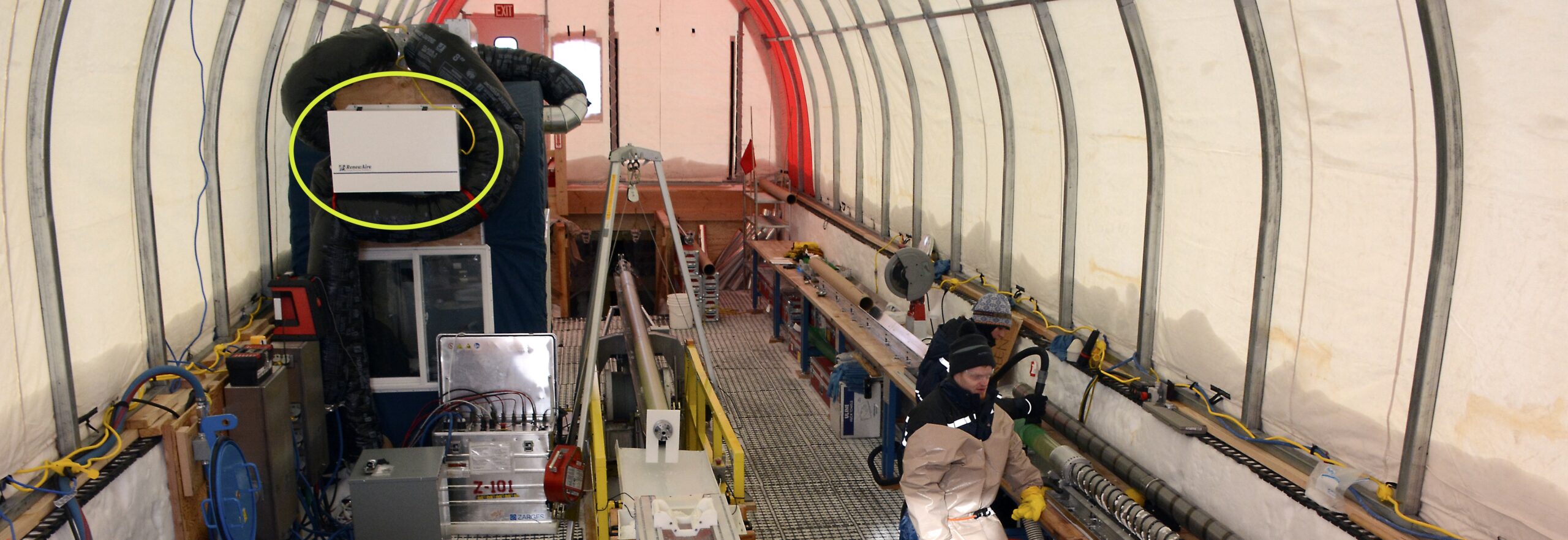
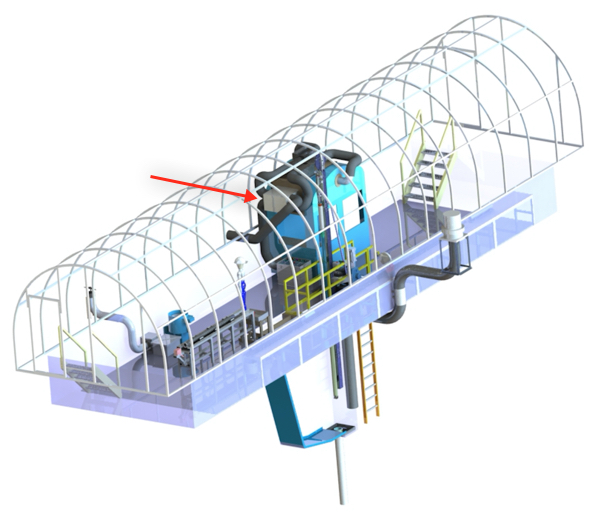
Once the ventilation challenge was solved, Boeckmann traveled to the South Pole to set up the drill site, including setting up the ERV. The drill site was built about a meter deep into the ground and was referred to by the team as the drill trench. Inside the trench was the drill room where the actual drilling occurred. The ERV was set into the upper portion of one of the walls of the drill room to provide fresh air and warmth to the drill team.
“The RenewAire ERV performed above and beyond the team’s expectations.” – Grant Boeckmann
Results
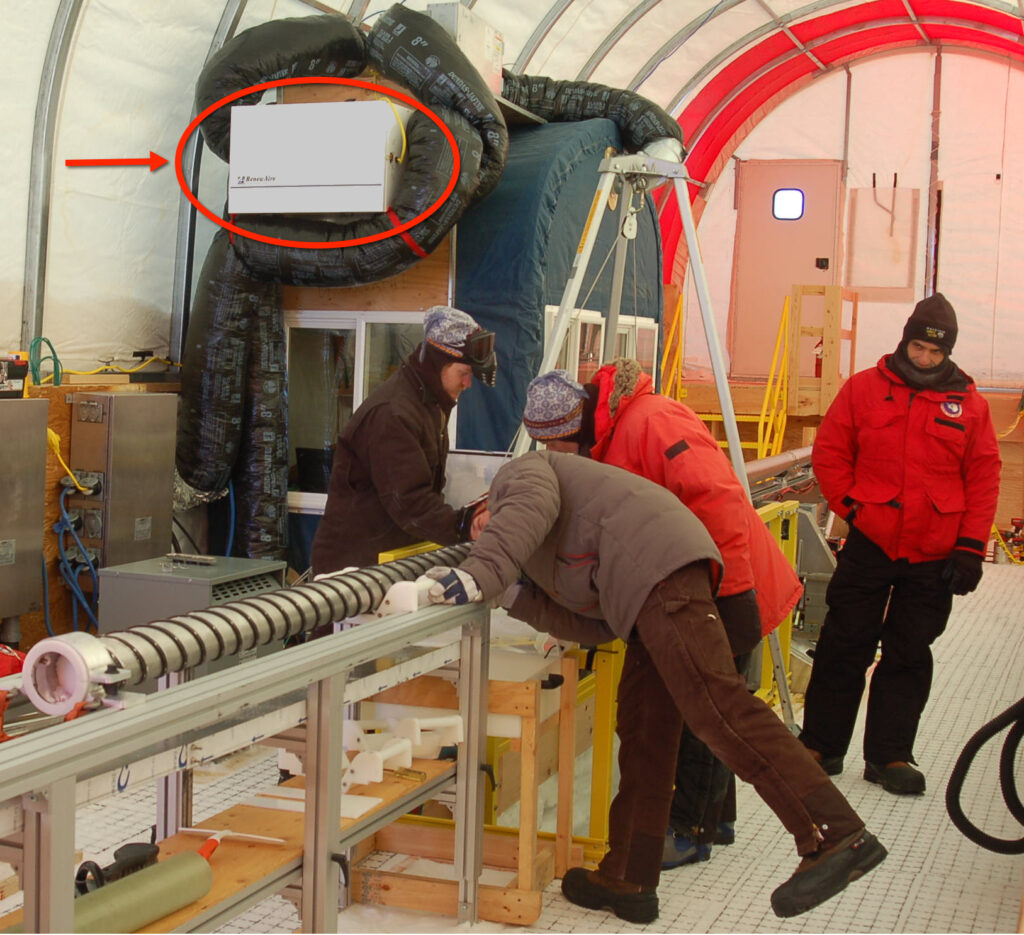
The RenewAire ERV was introduced once the wet drilling began at the beginning of the second month (December 2014) of the first three-month-long drilling season. It ran in 10-hour shifts, and according the Boeckmann, “The RenewAire ERV performed above and beyond the team’s expectations.”
Boeckmann reported that “the ERV operated perfectly in the frigid temperatures,” which averaged between -4°F and -22°F and could drop as low as -40°F. What’s more, because the ERV doesn’t have any condensate pans or drains, and the core technlogy prevents liquid water from forming, no defrosting was necessary.
Additionally, in order to ensure optimal airflow efficiency, Boeckmann set up two duct heaters. One on the intake side of the ERV to preheat the air going in to around 0°F, which was recommended by a RenewAire engineer, and the other on the output side of the ERV to heat the air to the desired drill-room temperature. When not in use during the off-season, the ERV endured temperatures that can drop to -117°F without any complications.
“The best thing about the RenewAire ERV is that once you turn it on, you never have to think about it again.” – Grant Boeckmann
Boeckmann said the ERV was a workhorse that maintained the drill room temperature between 40°F and 70°F and ran flawlessly. “The best thing about the RenewAire ERV is that once you turn it on, you never have to think about it again,” he remarked. “We didn’t have to de-ice the core and there weren’t any frost cycles to deal with. The ERV was very easy to handle and ran continuously the whole time without a hitch.”
Further, at the allocated energy level of seven kilowatts powering the drill room heating and ventilation system, the ERV increased airflow in the drill room by 40% compared to using no ERV. This provided the drilling team with the fresh air and the moderate temperatures they needed to run the drill non-stop during their 10-hour shifts.
Boeckmann also commented that the maintenance required for the ERV was minimal. “The core was checked a couple times in the season and there weren’t any issues,” he said. “Everything ran and functioned as was expected.”
Conclusion
The SPICE Core project will enable scientists to better predict the future of our climate – and the RenewAire ERV is playing a vital role in making this happen. Without the energy-efficient ERV enhancing the drill room’s indoor air quality, it would’ve been extremenly uncomfortable for the drillers to go deeper than 200 meters. Boeckmann agrees and concluded, “The RenewAire ERV worked great from the start, and we’re glad it will be with us until the end of the project when we reach our goal of 1,500 meters and 40,000 years.”
Next Steps
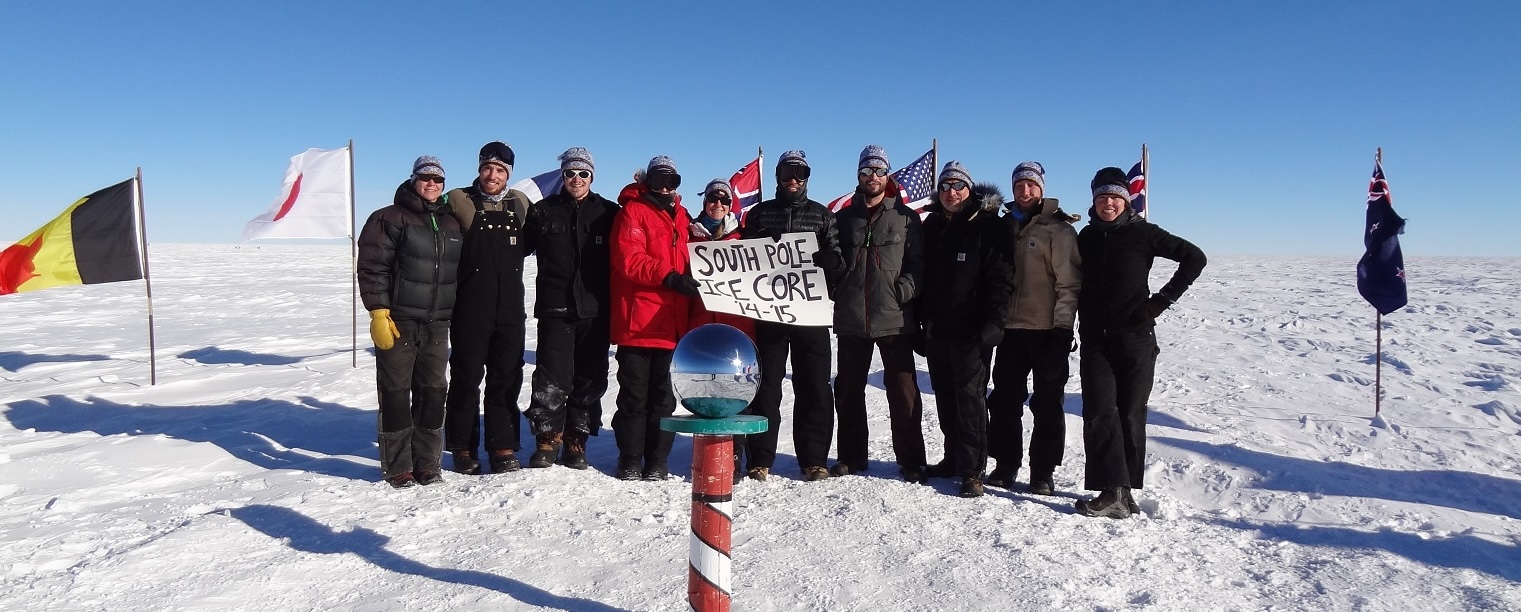
The SPICE Core project completed one season of drilling and has one more to go. At this point the team has drilled to a depth of 736 meters with mostly excellent ice-core quality. Already 600 meters have been shipped to the U.S. National Ice Core Laboratory (NICL) in Denver, CO for research purposes.
In terms of the RenewAire ERV, Boeckmann says it will be utilized for the full upcoming drill season beginning in November 2015. By enhancing the indoor air quality of the drill room in an energy-efficient manner, the RenewAire ERV is helping the project to reach its goal of drilling down to 1,500 meters and securing an environmental record spanning 40,000 years.
Recent Case Studies

[loop_index]
Municipal: Prairie du Sac Town Hall
[loop_index]
Public Safety: Wasilla Police Station