
Broome County Humane Society
Discover how the Broome County Humane Society (BCHS) utilized RenewAire ERVs to achieve 100% outdoor air and nine air changes per hour, successfully eliminating odors and enhancing energy efficiency.
Originally published September 27, 2019 | Last updated: April 29, 2026
At a Glance
Project:
Humane Society
Location:
Binghamton, NY
Industry:
Nonprofit organization
RenewAire ERVs Installed:
- (3) EV450 units
- (2) HE1X units
- (1) HE2X unit
Key Outcomes:
- IAQ prevents airborne disease transmission among animals
- Animals are healthier and happier with better IAQ
- Energy recovery reduces costs of conditioning the building
- Odors are greatly reduced with 100% outdoor air
- Independent systems in isolation rooms prevents the spread of disease
A New Standard for Animal Shelter Ventilation
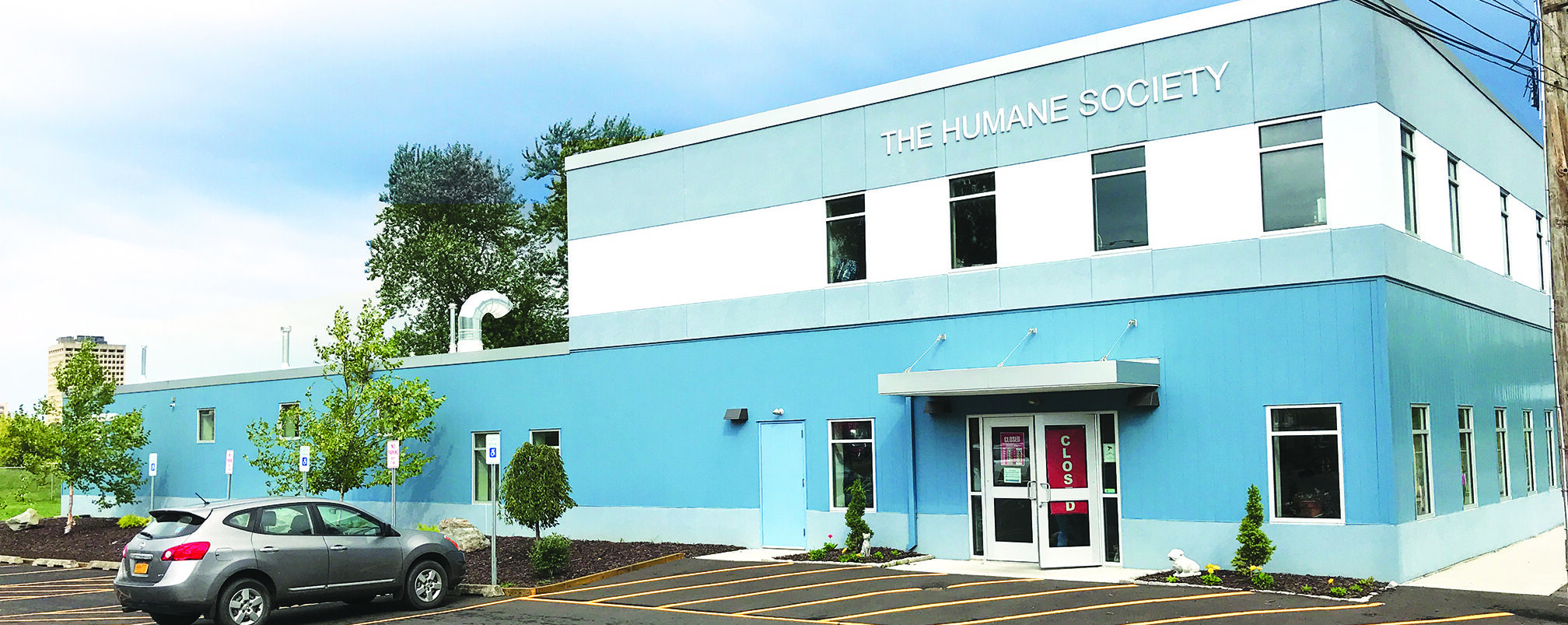
Dog and cat inhabitants in the new 12,000 sq. ft. Broome County Humane Society (BCHS) facility now breathe high-quality air. Specifically, they enjoy the same indoor air quality (IAQ) found in modern office, healthcare, and education environments. This is possible primarily because of a state-of-the-art HVAC design. Furthermore, this system minimizes odors and airborne contaminants. Consequently, the BCHS is now a role model for other animal shelters facing similar IAQ challenges.
The Impact of IAQ on Animal Health
Compared to the previous building, the new design results in healthier animals. According to Karen Matson, BCHS’s Executive Director, pets are now far less likely to contract communicable illnesses. The design emphasizes isolating several rooms with dedicated, self-contained energy recovery ventilators (ERVs). Specifically, these ERV units supplement the conventional rooftop unit (RTU) HVAC systems to ensure a constant flow of fresh air.
Improving Well-being for Animals and Staff
Like humans, reducing indoor CO2 levels helps make animals feel better, thus they’re living happier lives, according to Matson. Effective IAQ helps employees too. CO2 and other airborne contaminants decrease employee cognitive functions and productivity when levels surpass 1,000-ppm in workplaces, according to a 2015 study by the Harvard T.H. Chan School of Public Health, Boston. While the study focused on humans, experts speculate that CO2 accumulation has similar effects on animal well-being.
Building Challenges
The 103-year-old, non-profit organization’s cutting-edge building is decidedly different than its last facility, a former 6,000-square-foot trucking garage with half the animal capacity. Donated in the 1940s, the facility was sporadically retrofitted over the decades with a hodgepodge of residential HVAC equipment, such as furnaces and window air conditioners. However, while temperatures were adequate, the structure’s design prevented any modern IAQ measures.
Engineering a High-Performance HVAC Solution
To solve these legacy infrastructure issues, Keystone Associates Architects, Engineers and Surveyors LLC collaborated with Edward Sibert of Carrier Enterprises Northeast. Also instrumental in the outdoor air calculations was Robert Mott of Stamberger-Sender Associates. The final design utilizes two 7.5-ton Carrier RTUs in conjunction with RenewAire ERVs and one 5-ton split-system for the second-level offices.
Ventilation Challenges
The previous shelter followed strict sanitation standards. However, the residential equipment could not provide enough fresh air exchange to remove odors. This was a significant issue while housing upwards of 100 animals. Fortunately, the new system has transformed the environment.
“The new building has twice as many animals, but still smells 100-percent better,” says David Birtch. Birtch is the Vice President of Downstate Fabricating Heating & Cooling, which installed the HVAC equipment. By prioritizing energy recovery, the team was able to provide these high volumes of fresh air without the massive energy penalty usually associated with 100-percent outdoor air systems.
“We definitely wanted better air exchange in the new building, but energy recovery was equally important to reduce the cost of cooling or heating the significantly larger amounts of outdoor air we needed for optimum IAQ,” said Matson.
Disease Prevention through Isolation
Animal care facilities require separate rooms with self-contained HVAC systems to prevent sick animals from infecting others. Specifically, these rooms need 100-percent outdoor air exchange and negative room pressure. This ensures that the system exhausts air permanently rather than pushing it into adjacent hallways.
To achieve this, the BCHS facility features dedicated ERV systems for several key areas:
Dog and cat isolation rooms
Two intake areas
Specialized veterinarian suites
Technical Note: These isolated systems change out 100-percent of the air at a rate of nine air changes per hour (ACH). This strategy aligns with the specialized ventilation requirements for high-risk areas outlined in the Association of Shelter Veterinarians’ Guidelines for Standards of Care.
Specialized HVAC Design
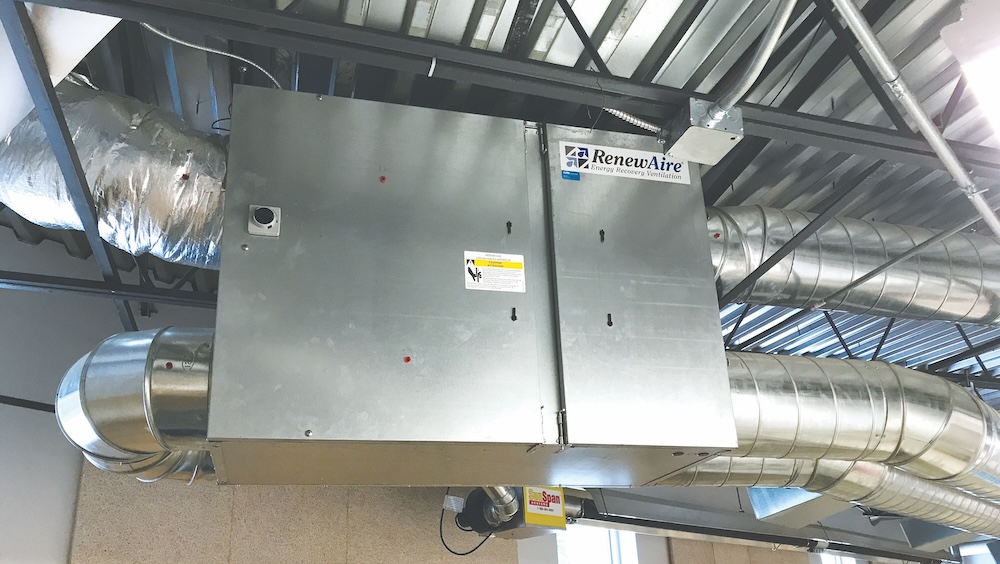
Separate HVAC designs have been instrumental in improving animal health. Specifically, these systems help prevent illnesses or shorten their duration. While the previous building had isolation areas, those rooms unfortunately shared a recirculating ventilation system. In contrast, the new facility uses a 100-percent outdoor air strategy.
Technical Specifications: The ERV Lineup
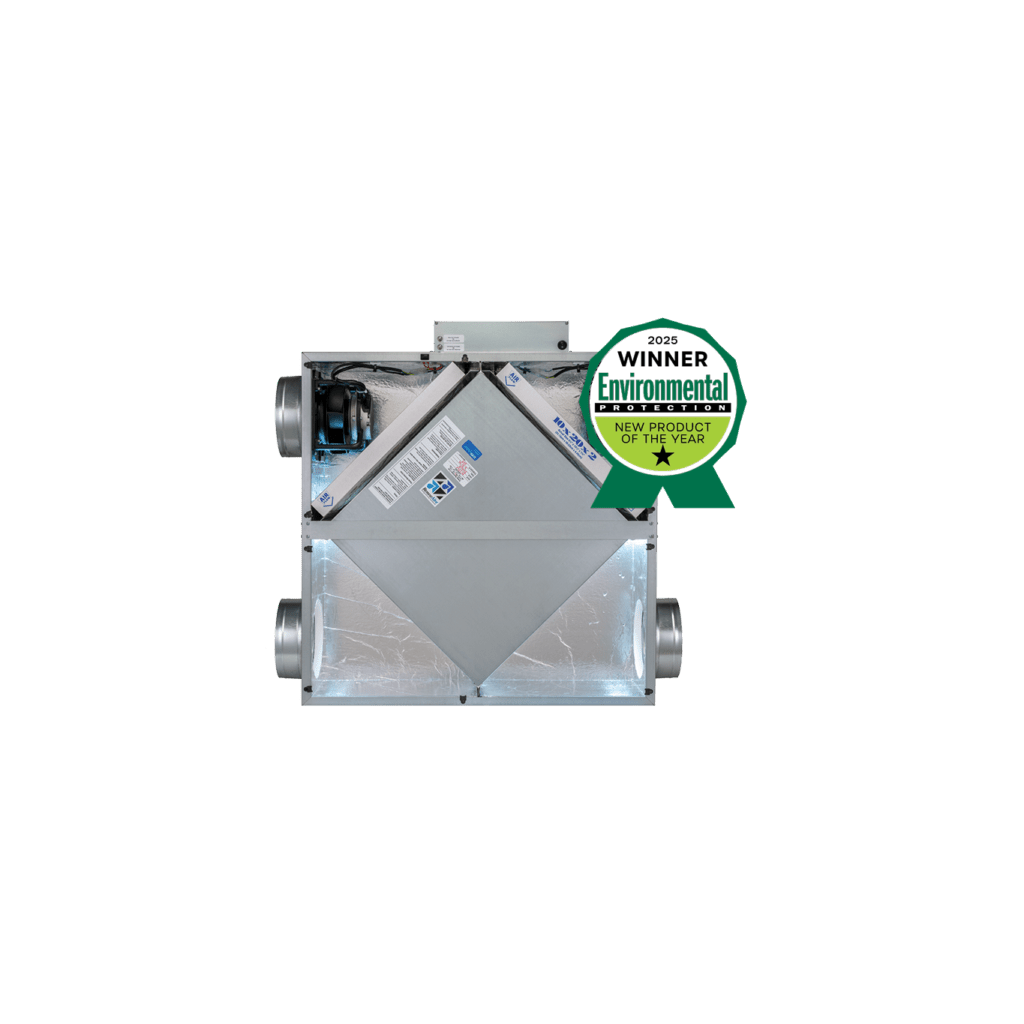
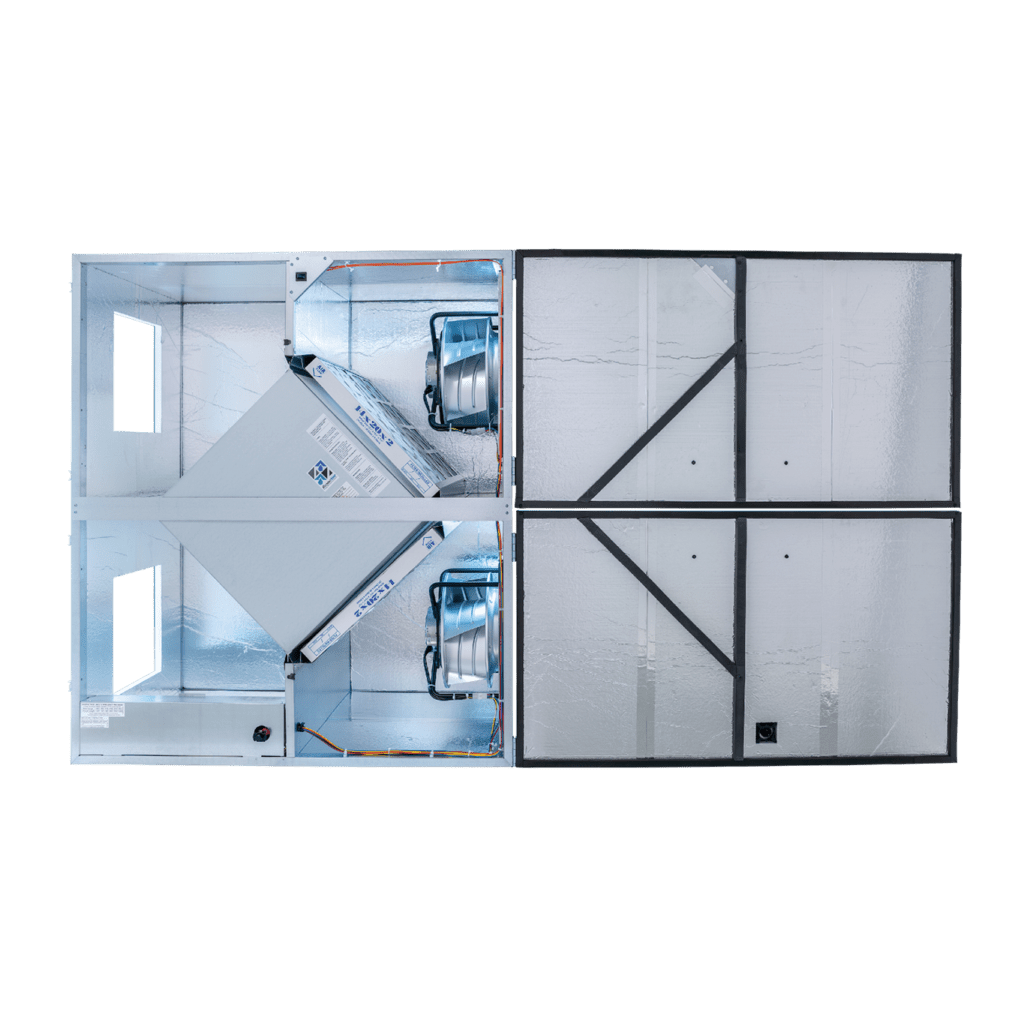
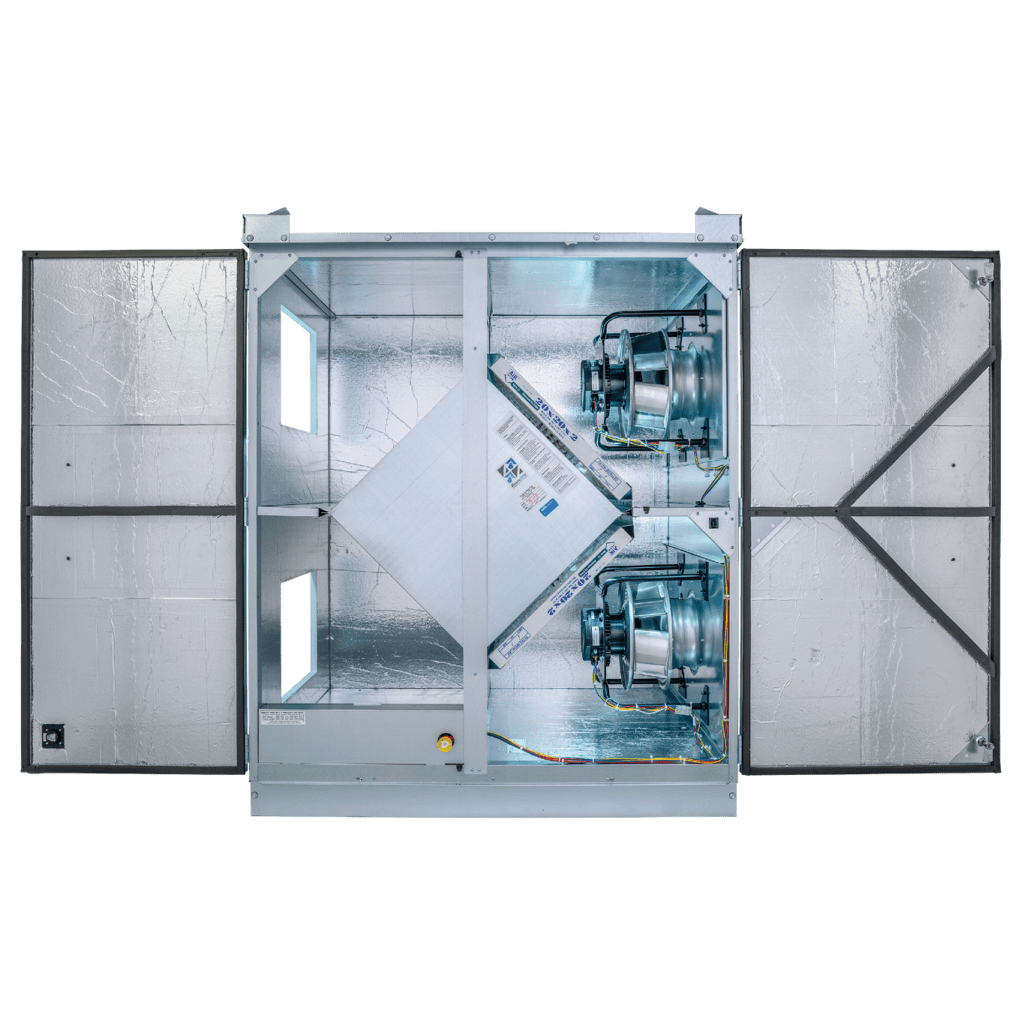
The key to this strategy is a fleet of RenewAire energy recovery ventilators (ERV). The installation includes:
Three EV450 units (300 to 400 CFM)
Two HE1X units (450 to 550 CFM)
One HE2X unit (2,000 CFM)
All of these are stand-alone ducted systems. Additionally, they utilize RenewAire’s proprietary, AHRI-certified static-plate core for heat recovery and humidity control.
Efficiency Without Cross-Contamination
Before exhausting stale air, the ERVs recover thermal energy from it. This process efficiently heats or cools the incoming outdoor air. Because the system uses a static core, this exchange occurs without any cross-contamination of the fresh airstream.
To distribute this air, Downstate Fabricating used 12 to 20-inch-diameter spiral metal ductwork. This transitions from the RTU plenums directly into the respective rooms.
Static Core vs. Enthalpy Wheels
“A static core is a simpler humidity control process to apply and maintain versus enthalpy wheels,” said Sibert. According to Sibert, static cores offer several advantages:
No Moving Parts: This makes the system easier to maintain over time.
No Mechanical Issues: Static cores avoid common problems with pre-heat and defrost.
Zero Cross-Contamination: This feature is critical for isolation areas in animal care facilities.
Results: Proven Performance for Animal and Human Health
The new facility achieves precise climate control in every area. Specifically, infrared heaters efficiently heat the kennels. In addition, the ERVs include electric supply heaters to provide neutral, tempered air at approximately 68°F.
Broad Industry Impact
The BCHS building was funded through a capital campaign, a mortgage, and new revenue-generating services. Since its completion, it has become a destination for industry professionals. To date, a half-dozen similar shelter organizations have visited the facility. They aim to study the BCHS model to solve their own IAQ and animal environmental health challenges.
Cross-Industry Success
The project proves that animal and human environments share similar IAQ requirements. Consequently, Sibert applied a comparable RTU and ERV design at a family health clinic in Cortland, NY. This transition from an animal care facility to a healthcare environment demonstrates the versatility and reliability of RenewAire’s energy recovery technology.
Frequently Asked Questions (FAQs)
How do ERVs help control odors in animal shelters?
RenewAire energy recovery ventilators (ERVs) helped eliminate odors by providing a continuous, 100% outdoor air exchange. Unlike traditional systems that recirculate indoor air, ERVs permanently exhaust stale, odorous air and replace it with fresh, filtered outdoor air, ensuring a cleaner environment for both animals and staff.
Can ERVs prevent the spread of airborne diseases in animal isolation rooms?
Yes, they can help reduce viral spread. By increasing ventilation, maintaining negative room pressure, and ensuring zero cross-contamination between airstreams, RenewAire ERVs can help isolate pathogens. This is critical in shelter environments to prevent the spread of diseases like kennel cough or upper respiratory infections.
How does a 100% outdoor air system impact a shelter's energy budget?
While 100% outdoor air systems usually require high energy loads, RenewAire ERVs recover the heat and humidity from the exhaust air to pre-condition the incoming fresh air. This allows the Broome County facility to maintain strict indoor air quality (IAQ) standards while significantly reducing its total energy consumption.
To learn more, visit: Renewaire.com/how-ervs-work/
What air change rate was achieved at the Broome County Humane Society?
The RenewAire system at this facility delivers nine air changes per hour (ACH) of 100% fresh air. This high rate of exchange ensures that even with a doubled animal capacity, the air remains fresh and the indoor environment remains healthy and efficient.
How does ERV technology help animal care facilities meet ASHRAE 62.1 standards?
RenewAire ERVs provide a continuous supply of tempered outdoor air, ensuring animal care facilities like shelters, kennels, and veterinary clinics meet or exceed ASHRAE 62.1 ventilation standards. This process dilutes indoor contaminants and CO2 levels without the massive energy loss associated with traditional exhaust fans.
To learn more, visit: Renewaire.com/how-ervs-work/.
Who managed the HVAC design and engineering for the Broome County Humane Society?
The facility’s cutting-edge HVAC system was a collaborative effort led by Keystone Associates Architects, Engineers and Surveyors LLC and Carrier Enterprise Northeast. Instrumental to the ventilation strategy was the team at Stamberger-Sender Associates, RenewAire’s regional manufacturer’s representative, who assisted with the complex outdoor air and energy recovery calculations.
Recent Case Studies

[loop_index]
Municipal: Prairie du Sac Town Hall
[loop_index]
Public Safety: Wasilla Police Station